Key takeaways
- Coconut oil is not an established allergy cure or a substitute for a complete diet.
- A small accidental taste is different from giving it regularly as a supplement.
- Topical use is not automatically harmless: dogs may lick it off, and an itchy area still needs a diagnosis.
- Research on formulated MCT diets does not prove that a spoonful of kitchen coconut oil produces the same result.
Coconut oil is easy to find and easy to recommend online. That does not make it a necessary supplement for your Frenchie, or a treatment for an itchy face, an upset stomach or an ear problem. Before adding it to dinner or rubbing it into the coat, ask what problem you are trying to solve. For Nina, I would want a clear reason and a vet’s guidance, rather than another jar bought on a promise.
For persistent scratching, start with our French Bulldog allergy guide and a veterinary assessment. This page looks specifically at the coconut-oil claims, the difference between feeding and applying it, and why “natural” is not enough to choose a treatment.
Eating coconut oil: tolerance is not a benefit
ASPCA Poison Control’s coconut guidance says small amounts of coconut-based products are unlikely to cause serious harm, but oils can cause stomach upset, loose stools or diarrhea. That is not a recommendation to add coconut oil to every meal.
It also adds fat and calories. If your Frenchie has digestive disease, a prescribed diet or a weight-management plan, ask the vet before adding any oil. There is no useful breed-wide spoonful or daily dose to give here: the purpose, whole diet and individual health matter.
Have your vet review the food and any extras together. Adding one ingredient cannot make an otherwise unbalanced homemade diet complete.
It is not the same as essential fatty-acid support
Coconut oil is not nutritionally interchangeable with every other oil. Tufts veterinary nutrition guidance identifies it as a poor source of linoleic acid compared with oils commonly used to supply that essential fatty acid. Do not replace a specified ingredient in a veterinary-formulated recipe simply because another oil sounds healthier.
What about rubbing it onto itchy skin?
A shiny coat after applying grease is not evidence that an allergy or infection has improved. In her discussion of coconut oil for itchy dogs, veterinary dermatologist Jacqueline Gimmler distinguishes research in human skin from evidence in dogs and advises choosing appropriate canine skin-support products with veterinary guidance.
That distinction matters for Frenchie folds, paws and ears. Redness, odor, discharge or repeated licking does not tell you whether the cause is allergy, infection, irritation or something else. Do not put kitchen oil into an ear canal or use it instead of a prescribed treatment. Ask what is suitable for the exact area before applying anything your dog can lick.
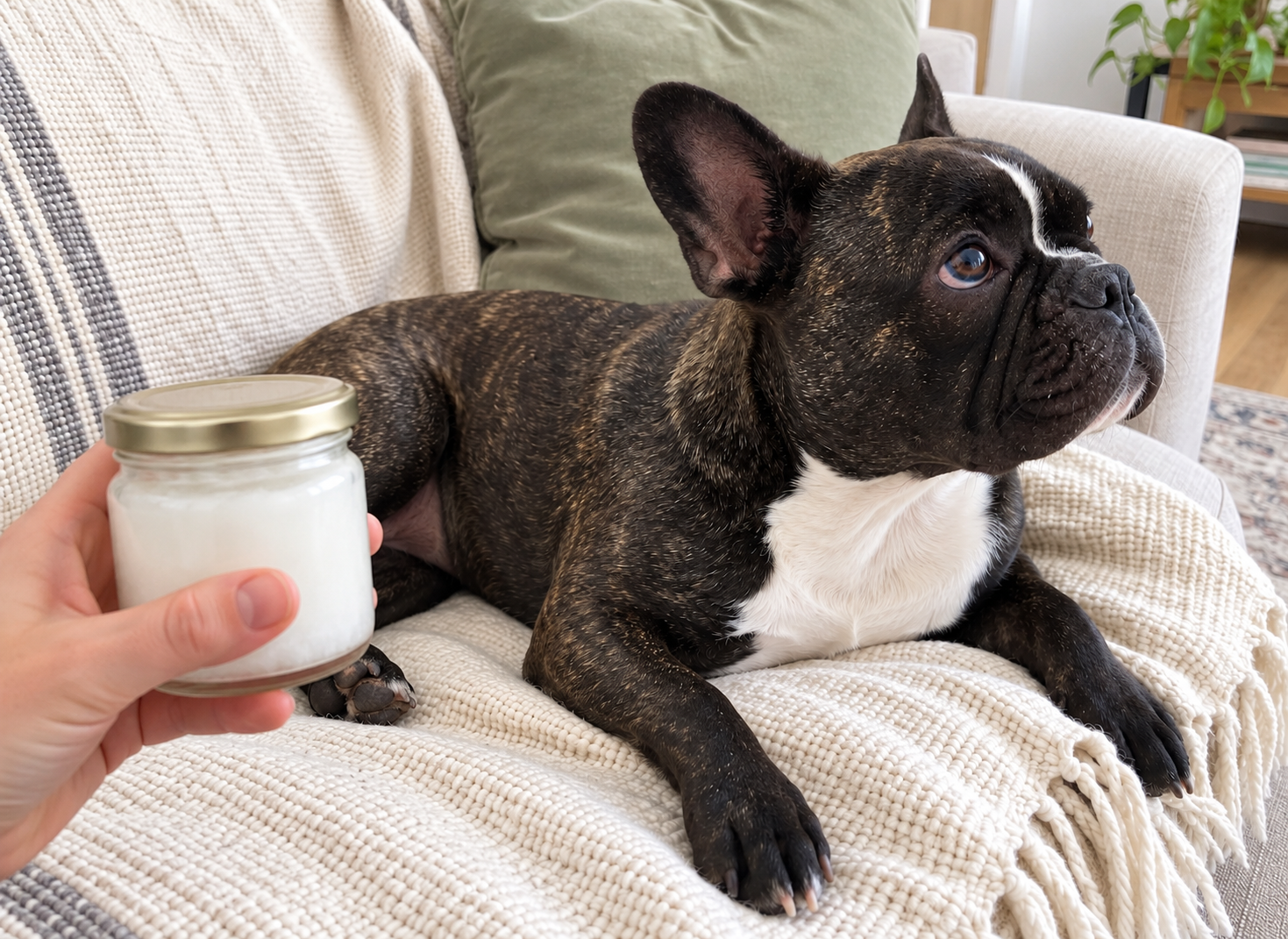
Coconut oil versus MCT research
You may see medium-chain triglycerides, or MCTs, mentioned in discussions of canine brain health or epilepsy. These are specific dietary or supplement interventions, not permission to replace medication with coconut oil. VCA’s MCT-oil guidance describes veterinary oversight, possible side effects and monitoring.
A Purina Institute technical review distinguishes natural coconut oil from refined MCT products with different fatty-acid compositions. It is manufacturer-authored evidence, not an independent reason to buy a product. Do not assume a household jar matches the formulation studied, and never change seizure treatment on that assumption.
FAQs about coconut oil for French Bulldogs
Is virgin or organic coconut oil better?
Those labels do not demonstrate a clinical benefit for your dog or establish a safe amount. Decide whether supplementation is useful before comparing jars.
My dog licked some. Should I panic?
A small taste of plain coconut oil is not the same situation as eating a large amount or a mixed cosmetic product. Check the ingredients and estimated amount. Contact your vet if the amount concerns you or your dog develops vomiting, diarrhea, pain or unusual tiredness. Do not induce vomiting yourself.
What should I use instead?
That depends on the goal. Itchy skin needs its cause assessed; a diet concern needs a nutrition review. Ask your vet what change is justified, how you will judge whether it helps and when to stop or recheck. Sometimes the useful next step is not buying another supplement.