Key takeaways
- French Bulldogs do not need raw meat simply because they are French Bulldogs.
- Raw diets raise separate questions about infection, nutritional adequacy and bones.
- Freeze-dried raw treats and toppers still count when discussing exposure with your vet.
- Choose a complete diet for your dog’s life stage and health, not a meat percentage copied from social media.
A raw diet can look appealing when you want more control over your Frenchie’s food. But recognizable ingredients and enthusiastic before-and-after stories don’t answer two important questions: is the diet nutritionally complete, and what risks come with feeding it uncooked?
Raw feeding is not the same as preparing a balanced cooked diet at home. You can explore ingredient control without taking on the same raw-meat exposure. This guide looks at the decision, not a recipe or a universal feeding plan. With Nina, my starting point would be a clear nutrition goal and a vet’s advice, not a dramatic before-and-after photo.
Is a raw diet better for a French Bulldog?
There isn’t good evidence to recommend raw feeding as the healthier default. The WSAVA nutrition committee’s raw-diet guidance finds no demonstrated health advantage over balanced cooked diets. It also notes that raw diets vary: some are higher in fat, and individual dogs may not tolerate that well.
A shinier coat, smaller stool or better appetite after a switch doesn’t isolate the effect of leaving food uncooked. The ingredients, calories, fiber and fat may all have changed. If itching or digestive trouble prompted the search, tell your vet exactly what is happening rather than treating “raw” as a diagnosis or a cure.
The American Animal Hospital Association does not endorse raw protein diets, including nonsterilized animal-origin treats, because risks extend beyond the dog eating them. That is a safety position, not a judgment about how much you care for your pet.
The infection risk reaches beyond the bowl
In an FDA investigation conducted in 2010–2012, raw pet food was more likely than the other tested food types to contain disease-causing bacteria. The FDA’s report found Salmonella and Listeria in some commercially sold raw samples. Those historical findings are not a current failure rate for every brand, but they demonstrate a real exposure route.
Hands, utensils and preparation surfaces can spread contamination. A dog looking well isn’t a reliable safety check either: Cornell’s raw-food guidance explains that apparently healthy dogs can shed pathogens. Keep the whole household in the decision, including visitors and other pets.
The CDC advises against raw pet food. It highlights greater concern for young children, older adults, pregnant people and people with weakened immunity, as well as vulnerable pets. If those circumstances apply, mention them at the appointment rather than focusing only on your Frenchie’s digestion.
Frozen and freeze-dried are not the same as cooked
Raw food includes more than a bowl of fresh meat. Check freeze-dried pieces, dehydrated animal treats, toppers and kibble with raw coatings. Cornell explains that freeze-drying does not provide the pathogen protection of cooking. An occasional topper is still worth including in your dog’s diet history.
High-pressure processing is not a reason to assume a product is risk-free. The CDC still classifies these products as raw and notes uncertainty about how effectively processing methods are being used across facilities. Ask the manufacturer what the product actually is instead of judging by its dry appearance.
Nutrition and bones need separate checks
A diet can carry bacteria even if it meets nutrient requirements. Conversely, good food handling cannot fix an incomplete recipe. A meat, organ and bone ratio isn’t proof that every required nutrient is present in the right amount.
For US commercial foods, look for the nutritional adequacy statement and the intended life stage. The FDA explains “complete and balanced” labeling and its nutrient-profile or feeding-trial basis. A supplemental product or treat is not automatically suitable as the main meal. Ask about the equivalent labeling requirements where you live.
WSAVA also warns that bones can break teeth or obstruct the digestive tract. Raw bones do not become a safe dental plan simply because they haven’t been cooked. Nutritional errors are especially concerning in growing puppies; don’t scale down an adult recipe and assume it meets growth needs.
What to ask your vet before changing food
- What problem are we trying to solve? Bring a symptom history and the current food, treats and supplements.
- Could a complete cooked option meet that goal? Discuss suitable commercial food or a veterinary nutrition referral for home preparation.
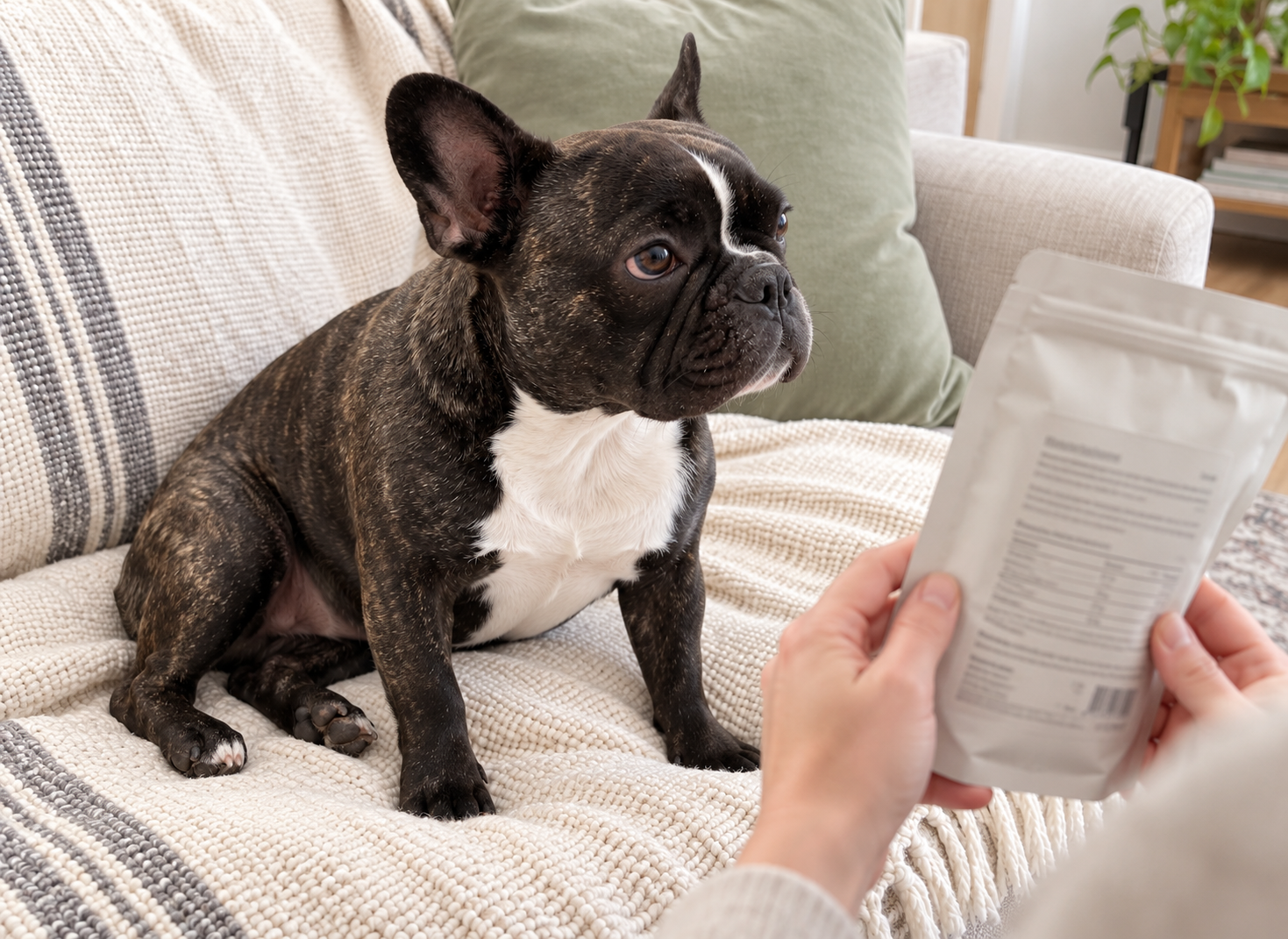
- Does the proposed product match my dog’s needs? Bring the full label, not just the front-of-pack claims.
- How should we change and review the diet? Ask for an individualized transition, portion and follow-up plan.
If you already feed raw, say so openly. Wash hands after handling it, clean and disinfect contacted surfaces, and follow storage instructions. These precautions reduce opportunities for contamination; they don’t make raw feeding risk-free. Contact your vet if vomiting, diarrhea or a change in behavior develops, and mention raw or freeze-dried products specifically.
FAQs about a French Bulldog raw diet
Will raw food cure allergies?
Don’t use it as a substitute for diagnosis. Our French Bulldog allergy guide explains why a controlled veterinary food trial is different from trying another protein or feeding style.
Can I mix raw food with kibble?
Mixing does not remove the raw portion’s contamination risk or prove the whole diet is balanced. Bring both labels and the intended amounts to your vet before replacing part of a complete meal.
Do I have to feed kibble instead?
No. Complete cooked choices can include canned or fresh cooked foods, or an individually formulated home-cooked diet. The useful goal is suitable nutrition with manageable safety risks, not winning an argument about feeding styles.