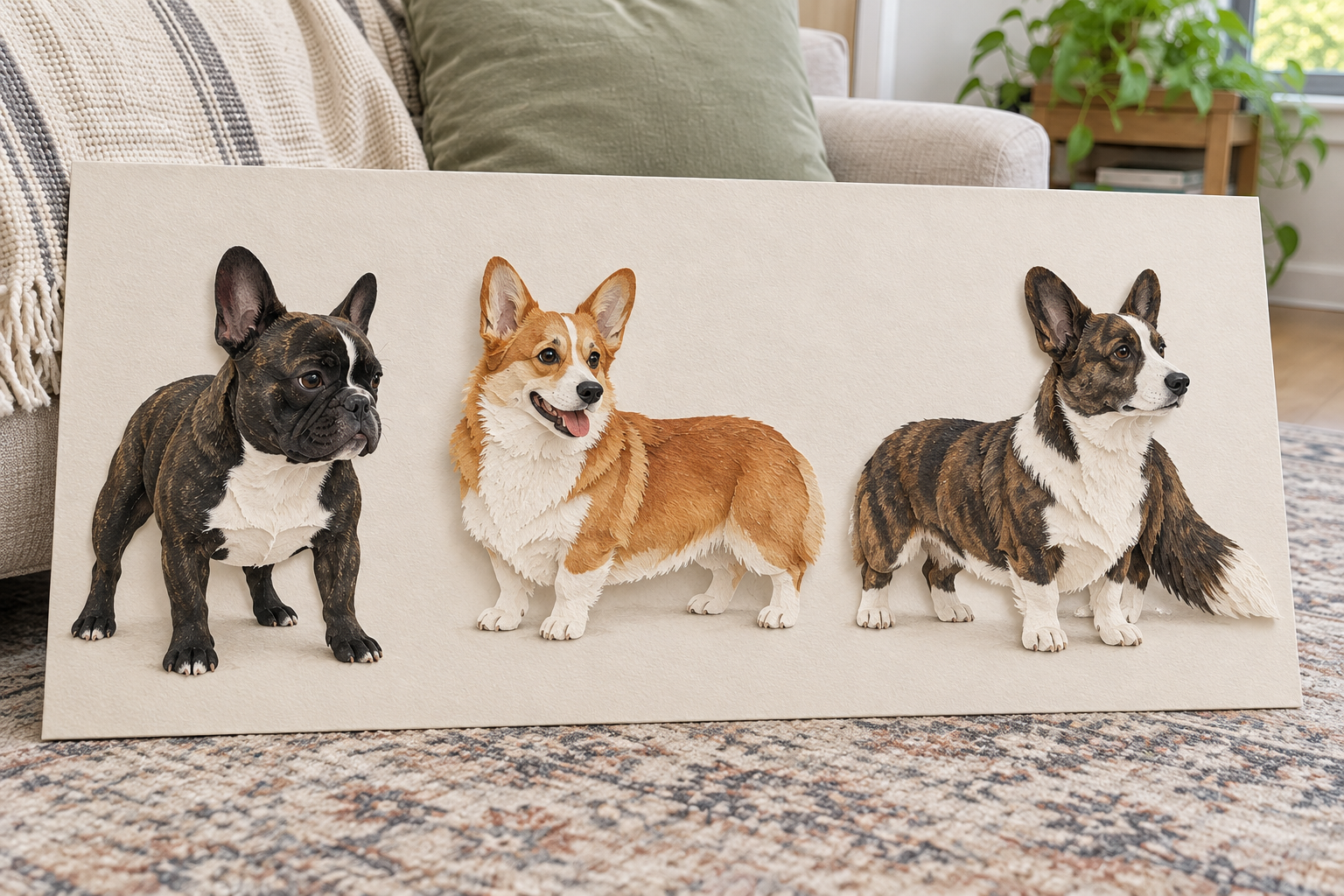

Key takeaways
- A corgi French Bulldog mix has variable size, coat and behavior; identify the corgi parent when possible.
- A longer-looking muzzle does not establish a healthy airway, and short-legged ancestry deserves a back-health discussion.
- Choose through health records, observed behavior and a realistic daily routine.
A corgi French Bulldog mix combines Frenchie ancestry with a Pembroke or Cardigan Welsh Corgi. You may see names such as Frorgi, Frorgie or French Corgi, but none tells you exactly how big, busy or easy to care for the dog will be. The useful questions are which parents are involved, how the individual moves and breathes, and what their everyday behavior is like.
Our guide to French Bulldog mixes compares the wider options. For this particular cross, I’d look closely at activity needs, coat care and back health before being won over by the ears.
Which corgi is in the mix?
Pembroke Welsh Corgis and Cardigan Welsh Corgis are separate breeds. The AKC’s comparison of the two corgis explains their different histories and builds. An advertisement that says only “corgi cross” leaves out information worth asking for.
Ask whether both parents are known, whether either parent is already mixed, and what supports the ancestry description. A shelter may have only an estimated breed label. That uncertainty does not make the dog a poor prospect; it means you should choose based on the dog and available records rather than a promised recipe.
Size, shape and shedding
There is no dependable adult weight you can assign from the nickname alone. The actual parents’ measurements and a puppy’s growth history are more useful than an online “typical size” chart. Even then, an estimate is not a guarantee. An adult dog offers much clearer information if your housing, lifting ability or travel plans impose a firm size limit.
Look beyond height. Check whether the dog can move comfortably, turn easily in a crate and use the access routes in your home. Measure their chest and length before buying equipment; a Frenchie-sized harness or corgi-sized bed may be the wrong fit.
A corgi parent can mean more coat to maintain, but it does not establish one coat type for every puppy. Inspect the actual coat and ask what grooming it needs. AKC grooming guidance distinguishes short coats from denser coats with undercoat and recommends matching the tool and frequency to the dog. Use gentle pressure, and seek veterinary advice for bald patches or sore skin rather than brushing harder.
Activity, barking and behavior at home
Corgis have a herding background, so movement-chasing, barking and nipping are sensible subjects to ask about. They are not a checklist that every cross will inherit. Nor does a French Bulldog parent guarantee a quiet dog that is happy with little to do.
Research involving purebred and mixed-breed dogs found that ancestry offers limited prediction of an individual’s behavior, even though some behavioral tendencies are heritable. Use the parents’ backgrounds to ask better questions, then pay attention to the answers about this dog.
- What happens when children run or another dog starts playing?
- Does the dog bark at hallway noises, visitors or being left alone?
- Can they settle after ordinary activity, and what helps them do that?
- How do they respond to grooming, handling and having food or toys nearby?
For a dog that chases ankles, arrange calm, supervised interactions and use barriers to prevent rehearsing the behavior. Reward an alternative such as coming to you or settling on a mat. Persistent nipping, guarding or fear deserves qualified help. The American Veterinary Society of Animal Behavior recommends reward-based training, rather than physical punishment or intimidation.
The two health conversations to have early
Back health involves more than a long silhouette
French Bulldogs and both corgi breeds appear among the breeds in which UC Davis identifies the CDDY variant. This variant is associated with early disc degeneration and susceptibility to disc herniation. A separate variant, CDPA, also affects leg length. UC Davis explains why short legs and disc-disease risk are not interchangeable descriptions.
Ask your vet to interpret relevant parental test results and the dog’s own examination. Do not treat a DNA panel as a guarantee against every spinal problem, or assume that mixing two breeds removes a risk they can share.
New back pain, wobbliness, dragging feet or difficulty standing needs prompt veterinary attention; inability to walk or urinate is an emergency. The American College of Veterinary Surgeons describes disc-related signs and why timing matters. Avoid trying to diagnose a painful back by making the dog jump or climb stairs.
A longer muzzle is not a breathing certificate
A cross may have a less shortened face than a French Bulldog, but appearance cannot reveal every airway obstruction. Persistent noise, disrupted sleep or difficulty with mild activity deserves assessment. Cambridge’s BOAS guidance also notes that some affected dogs show little difficulty while resting.
Breathing distress, blue-gray gums or collapse needs emergency veterinary care. Our breathing warning-sign guide explains what to watch for. Do not assume a corgi parent makes these signs harmless.
Build the routine around comfort and curiosity
There is no defensible one-hour exercise rule for every corgi Frenchie mix. Discuss activity with your vet, especially for a puppy or a dog with airway or mobility concerns. Use comfortable walks, sniffing opportunities and short training sessions, adjusting to the dog’s response rather than pushing through a fixed route.
Heat and humidity deserve extra care in a short-faced dog. Cornell explains that brachycephalic dogs cool themselves less efficiently. Plan cooler outings and a cool indoor resting place. A keen dog can still overexert themselves.
Before bringing one home, review the medical history, both parents’ relevant screening when available, the feeding routine and any known behavior needs. Our breeder-record checklist helps distinguish named test results from a vague “health checked” claim. With a rescue, ask what is known and what has not yet been assessed.
FAQs about corgi French Bulldog mixes
Is a Frorgi a recognized breed?
The name is an informal label for a corgi–French Bulldog cross. It does not provide a fixed breed standard or guarantee which traits a puppy will have. Ask for the actual parentage rather than relying on the label.
Are they good apartment dogs?
Some individuals may fit well. Ask about barking, settling alone and toileting arrangements, and consider stairs and safe handling. Small size is only one part of apartment suitability.
Will a corgi Frenchie mix herd children?
Some may chase or nip at moving people, but ancestry cannot tell you whether a particular dog will. Supervise children, provide separation when needed, and get help with persistent behavior. Do not dismiss nipping as a cute breed quirk.
How long does this mix live?
A nickname does not establish a lifespan. Treat precise figures for this cross cautiously rather than averaging the parent breeds’ estimates. The dog’s health, family history and veterinary assessment are more useful for planning their care.
Is the mix healthier than a French Bulldog?
That cannot be promised. Assess breathing, movement and relevant inherited risks individually. A corgi parent does not automatically remove airway problems or disc-disease susceptibility.
How much should one cost?
Ask the breeder or rescue for the actual fee and what care it includes. Budget separately for veterinary care, training and grooming. A fashionable cross name is no reason to accept missing records or pressure to pay quickly.