
If your Frenchie is struggling for breath, using their belly to breathe, has blue or gray gums, or collapses, go to an emergency vet now. Keep them calm and cool, and call ahead if you can. Do not wait for the gums to change color before getting help.
French Bulldog breathing issues often involve brachycephalic obstructive airway syndrome, or BOAS. Their shortened airways can make moving air difficult, but a sudden change also needs checking for other causes. Familiar Frenchie snoring should never become a reason to overlook breathing effort.
Key takeaways
- Labored breathing, collapse or blue-gray gums need emergency care.
- BOAS can affect exercise, sleep and digestion. Familiar snoring does not prove a healthy airway.
- Ask your vet about airway assessment, daily management and whether surgery could help.
When breathing trouble needs emergency care
Watch the whole dog, rather than judging the sound alone. Emergency signs include hard abdominal pumping, gasping, a stretched-out neck with difficulty drawing air, weakness, or an inability to settle comfortably. Cornell’s respiratory-distress guidance recommends immediate veterinary attention and a cool, calm journey to the hospital.
- Stop activity and move out of heat. Use air conditioning in the car.
- Keep handling gentle and avoid pressure around the neck.
- Let the clinic guide transport if your dog is weak or cannot stand.
- Do not force food, water or medication into a dog struggling to breathe.
If heatstroke is possible, start cooling with cool water over the body and airflow while arranging immediate care. Keep water away from the nose and mouth. Weakness, confusion, vomiting or collapse after heat exposure make this urgent even if the dog seems to improve. Cornell’s heat-safety advice explains why flat-faced dogs are particularly vulnerable.
For Nina, I would rather make an urgent call that turns out to be precautionary than assume a new breathing struggle is part of being a Frenchie.
Why French Bulldogs have breathing issues
Brachycephalic means short-headed. In a Frenchie, the shortened skull can leave too little space for soft tissues and airflow. BOAS describes the resulting obstruction and its effects, which vary between dogs. A French Bulldog’s appearance alone cannot tell you how well their airway functions.
The American College of Veterinary Surgeons describes several possible obstructions:
- Stenotic nares: narrow nostrils, which may also pull inward during a breath.
- An elongated soft palate: tissue at the back of the mouth that interferes with airflow. Excess thickness can matter too.
- Everted laryngeal saccules: tissue near the voice box drawn into the airway by the effort of breathing.
- Other changes: some dogs also have a small windpipe or progressive collapse around the larynx.
These problems can occur together. A roomy-looking pair of nostrils does not rule out obstruction farther back. Your vet may need an airway examination under anesthesia or other tests to establish what is happening.
Common breathing noises are still worth discussing
A Frenchie can make a brief snort without being in an immediate crisis. That does not make persistent noisy breathing a healthy breed standard. Cambridge’s BOAS researchers explain that normal upper airways breathe quietly and that some affected dogs show little difficulty at rest.
Arrange an assessment for repeated snoring, noisy awake breathing, disrupted sleep, or poor exercise tolerance. New or worsening noise deserves a sooner call. Effortful breathing at rest belongs in the emergency category, not on a list to mention at the next annual visit.
Changes during walks and play
Stopping early, struggling on a mild walk, needing unusually long recovery, or repeatedly gagging after excitement are useful things to report. Do not push a dog to finish a route or provoke symptoms to “test” their airway. A video taken without delaying care may help the vet understand what happens at home.
Sleep, gagging and regurgitation
Breathing pauses, waking distressed, or repeatedly needing an unusual position to sleep merit a conversation about BOAS. Resting a head on a cushion by itself does not diagnose obstruction. The concerning pattern is disrupted sleep or effort, especially alongside other airway signs.
Frequent gagging or bringing food back up also deserves evaluation. Airway and gastrointestinal problems can coexist in brachycephalic dogs; a food switch should not substitute for investigating recurring regurgitation. Tell the vet whether the episode was passive regurgitation or involved abdominal heaving and vomiting.
Why is my Frenchie breathing fast while sleeping?
Breathing can briefly become quicker or irregular during dream sleep. Persistent rapid breathing while a dog is fully relaxed is different, particularly when it is new. Heart, lung and airway disease, pain and other illnesses can all change breathing, so do not assume BOAS explains every episode.
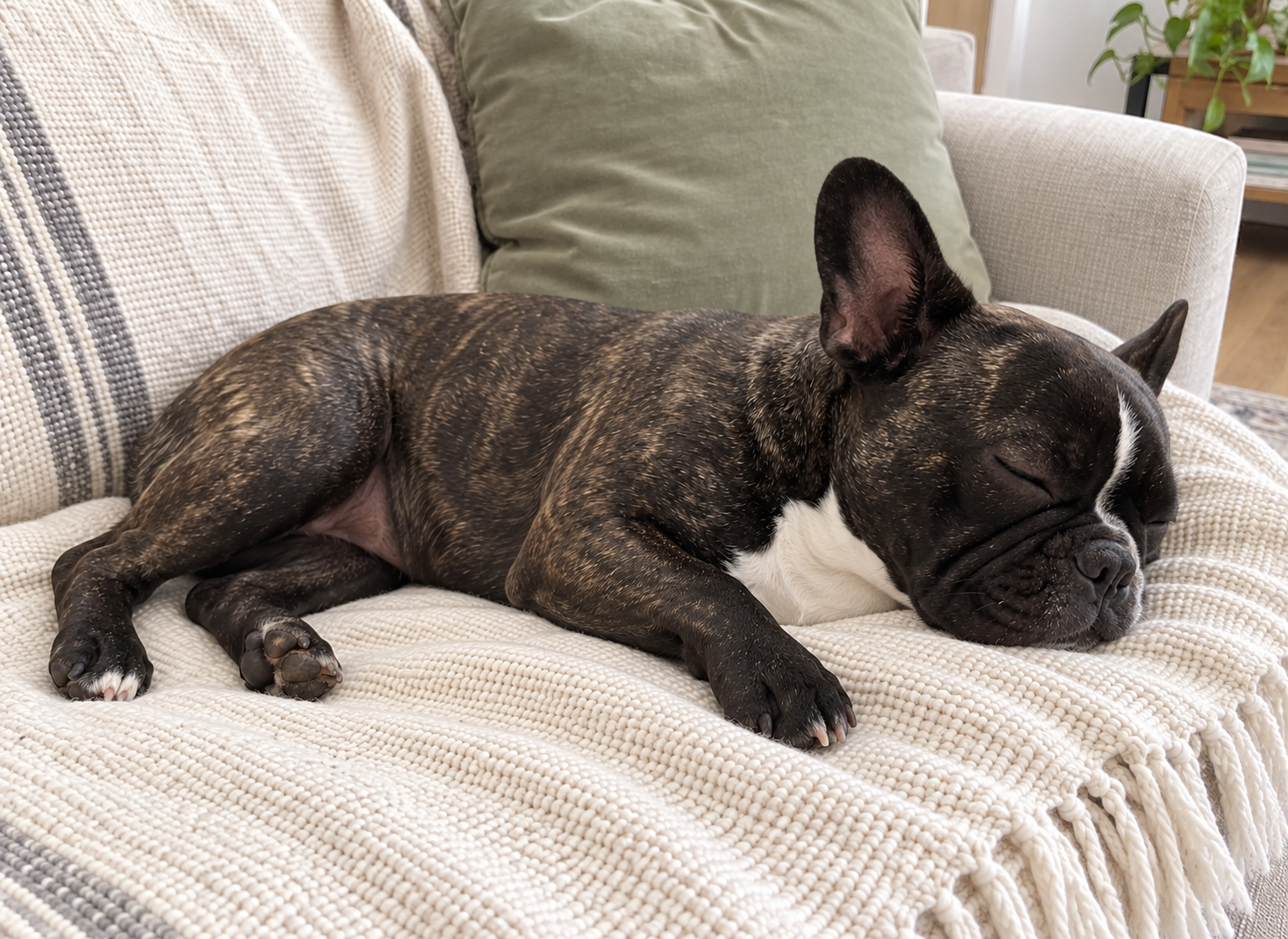
When your dog is comfortable, cool and asleep, count the chest rising and falling as one breath. Count for 30 seconds and double it, or use a full minute. Avoid counting during panting, movement or obvious dreaming. Keep a note of the number and whether the breathing looks easy.
AAHA gives 15–30 breaths per minute as a usual resting range. A repeatedly higher sleeping rate or a clear rise above your dog’s usual rate deserves a prompt veterinary call. A number within that range does not make labored breathing safe. If there is effort, distress or weakness, seek emergency care instead of taking repeated measurements.
For a puppy, ask the vet what is appropriate for their age and current health. Short bursts of dream movement may be normal, but persistent fast breathing, poor feeding, lethargy or difficulty breathing should not be dismissed as “just a puppy thing.”
How vets assess BOAS
Expect questions about exercise, heat, sleep, digestive signs and how symptoms have changed. The vet will examine your dog and decide whether further airway testing or referral is needed. Bring ordinary videos and a short symptom log, rather than trying to reproduce a bad episode in the waiting room.
Respiratory function grading uses an examination before and after controlled exercise, performed by a trained assessor. Cambridge’s scheme distinguishes dogs with little or no clinically significant impairment from those needing management or treatment. This is a clinical assessment, not a home treadmill challenge.
Useful questions are: Which signs concern you? Are the nostrils the only problem? Does my dog need referral now? What should trigger an emergency visit? What level of activity is appropriate while we decide?
Daily habits that can help a Frenchie breathe more comfortably
Management supports the dog while the underlying problem is assessed. It cannot widen a structurally narrowed airway.
- Use body condition, not a breed-average weight. Ask your vet to assess your dog and set a feeding plan if weight loss is needed. Excess body fat is associated with worse BOAS.
- Avoid heat and humidity. Choose cooler conditions and shorten or skip outdoor activity when necessary. Our Frenchie summer cooling guide covers everyday prevention.
- Keep lead pressure off the throat. A well-fitting body harness can help, but it does not treat BOAS.
- Let the vet set exercise limits. Use gentle activity that the dog tolerates. A fixed daily minute target is inappropriate for a dog with breathing trouble.
- Reduce avoidable excitement. Calm greetings and quieter games may be more manageable than prolonged chasing or frantic barking.
Cambridge’s management guidance emphasizes body condition, avoiding overheating and excessive exertion, and tailoring treatment to the dog. Keep reassessing: a routine that once worked may need changing if symptoms worsen.
Can surgery help French Bulldog breathing problems?
Surgery can improve airflow and quality of life in suitable dogs. Depending on the examination, it may widen the nostrils, shorten or thin the palate, or address other obstructing tissue. It does not make every airway normal, and some dogs need further treatment or lifelong precautions.
Recovery is an important part of the decision because swelling, bleeding or regurgitation can threaten the airway. Ask who will monitor your dog after anesthesia, what overnight care is available, and what the plan is if breathing deteriorates. An experienced surgical team can explain the likely benefit and specific risks for your dog.
For cost, request a written estimate covering the assessment, procedures, anesthesia, hospitalization, medicines and rechecks. Ask separately about emergency care or revision surgery. A price for “nostril surgery” may not include the other procedures your dog needs.
FAQs about French Bulldog breathing issues
Is snoring normal for a French Bulldog?
It is common, but common does not mean harmless. Mention regular snoring at an airway assessment. Seek a sooner review if it is new, worse, or accompanied by breathing pauses, disturbed sleep or daytime difficulty.
Why is my Frenchie breathing hard while resting?
Visible effort while resting is an emergency sign, regardless of the cause. Keep your dog calm and cool and contact the nearest emergency veterinary hospital. Do not spend time trying home remedies or assuming it is anxiety.
Is reverse sneezing the same as a breathing crisis?
No. A brief bout of repeated inward snorts can be a reverse-sneezing episode. However, first-time, persistent or uncertain episodes should be discussed with your vet. Distress, weakness or failure to return to comfortable breathing needs urgent care. Cornell explains the reflex and why it can resemble breathing trouble.
How long can a French Bulldog live with BOAS?
There is no useful lifespan prediction from the label alone. Severity, complications, treatment and other health conditions matter. The decision is whether your dog can breathe, sleep and move comfortably now, and what treatment can improve that.
Can weight loss fix breathing problems?
Weight management may reduce strain in an overweight dog, but it cannot correct an elongated palate or pinched nostrils. Keep an airway assessment on the plan rather than waiting for a target weight while symptoms continue.
Should I wait for my puppy to grow out of noisy breathing?
No. Ask the vet to assess persistent noise or poor exercise tolerance early. You do not have to wait for a crisis to discuss the airway, and not every puppy will need the same treatment.