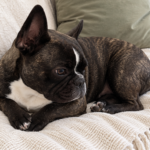
A little beard beneath a Frenchie-like face is an appealing combination. Before you fall for the puppy photo, though, picture the comb beside the sofa and the grooming appointments on your calendar. A longer coat can change daily life more than a pair of upright ears.
A French Bulldog Shih Tzu mix, often called a French Bull Tzu, combines two small companion breeds with very different coats. Appearance, shedding and behavior vary, and both parents have flat-faced health concerns. If you’re comparing French Bulldog mixes, this is one where coat care and comfortable breathing deserve attention before looks.
Key takeaways
- French Bull Tzus vary in size, coat and temperament; the name does not promise a particular puppy.
- A longer coat may need daily attention and professional grooming.
- Both parents are flat-faced. Check breathing, eyes and health records rather than assuming mixing removes risk.
What is a French Bull Tzu?
The name describes French Bulldog and Shih Tzu ancestry. It is an informal crossbreed name, not a consistent breed standard. Ask what the parents actually are; a nickname in an advertisement does not establish a dog’s family history.
French Bulldogs have a compact build and a short coat. Shih Tzus can grow a long coat that needs considerably more attention. A mix may have upright or folded ears, a shorter or longer muzzle, and a coat whose eventual texture is difficult to judge from a young puppy photograph.
That also means a fluffy French Bulldog is not automatically a French Bull Tzu. Appearance alone cannot confirm ancestry. With a rescue dog, an honest description of known history and current needs is more useful than a confident guess based on its ears.
Size, temperament and life at home
Both parent breeds are small, but there is no single dependable adult weight or height for this cross. The parents’ sizes, previous adult offspring if known, and your vet’s assessment of a puppy’s growth are more useful than a tidy range copied across breed-profile websites. An adult rescue offers much less uncertainty about eventual size.
Both breeds were developed as companions, so a people-oriented dog is a reasonable possibility. That is a starting point for questions, not a guarantee of cuddling, quietness or easy introductions. Ask how the individual dog responds to visitors, other dogs, handling, being left alone and everyday household noise.
For a puppy, build those skills gradually through rewarding short training sessions and comfortable exposure to new experiences. For an adult, ask the foster carer or current owner for examples: what happens when the doorbell rings, when someone touches the feet, or when the household leaves?
A small home can work if you can provide suitable activity, rest, companionship and a comfortable temperature. Small size does not establish how much a dog will bark or how long it can cope alone. Supervise children and dogs, and give the dog a resting place nobody interrupts.
The coat decides the grooming routine
This is the practical difference I’d settle before choosing this mix. The AKC’s Shih Tzu guidance calls for daily brushing when the coat is long, including attention to facial hair. A short-coated cross may need a lighter routine; a longer-coated one may need daily combing and regular appointments with a groomer.
Ask a groomer to show you how to work through your dog’s actual coat and check down to the skin without pulling. Pay attention to places where hair rubs together, such as behind the ears, under the legs and around a harness. A smooth-looking outer layer can hide tangles underneath.
- Short, smooth coat: choose a gentle tool suited to that coat. Our French Bulldog brush comparison explains the differences between softer tools.
- Longer or silky coat: ask about a manageable trim, a comb and an appropriate brush. A rubber mitt alone may not reach the tangles.
- Matted or painful areas: stop pulling and book professional help. Do not cut close-fitting mats out with household scissors.
- Hair near the eyes: have a groomer manage it safely. A moving face is not a good place to learn precision trimming.
Check nails, ears, teeth and any facial folds as part of ordinary care. Keep moist folds clean and dry using the routine your vet recommends, and have odor, redness or discomfort assessed. A grooming visit does not replace dental care or treatment for sore skin.
I’d use the same test for Nina and for a French Bull Tzu: does the routine leave the dog comfortable, and can the person keep it up? A shorter, manageable trim is a sensible choice when maintaining a long coat would turn every evening into a negotiation.
Shedding and allergies are separate questions
Do not buy this cross on a non-shedding promise. Coat characteristics vary, and less visible hair on the sofa does not make a dog maintenance-free.
It also does not make the dog allergy-free. The American College of Allergy, Asthma and Immunology explains that all dogs produce allergens, including proteins found in dander and saliva. A long or low-shedding coat cannot guarantee that a person will tolerate the dog.
If someone in the household has a dog allergy, discuss the decision with their allergist before committing. A short visit with a puppy is not a medical guarantee of future tolerance.
Health checks matter on both sides of the family
French Bulldogs and Shih Tzus are both brachycephalic, meaning their skulls and faces are shortened. VCA’s veterinary explanation of brachycephalic airway syndrome includes both breeds and describes breathing difficulty, exercise intolerance and increased difficulty cooling in affected dogs. Crossing them does not automatically solve these problems.
Ask a vet to assess the individual dog rather than judging airway health from the length of its nose alone. Noisy or effortful breathing, tiring unusually quickly, disturbed sleep or difficulty coping with warm weather deserve attention. Severe breathing difficulty or collapse needs urgent veterinary help.
Keep activity comfortable and avoid exertion in hot or humid conditions. The French Bulldog breathing guide explains the warning signs in more detail. Do not make the dog exercise harder to prove it is fit.
Eyes, joints, skin and dental health also belong in the discussion. Ask to see dated veterinary records and relevant parental screening results. The AKC’s French Bulldog profile lists hip, patella, cardiac and ophthalmologist evaluations recommended by its parent club. Shih Tzu history brings its own eye and joint questions. Your vet can explain which examinations and tests matter for the particular parents.
A general puppy check, a DNA panel and a breeder’s health guarantee are different things. None certifies that a dog will never develop an inherited problem. Ask what was tested, what the results were and what was not assessed.
Choosing a puppy or rescue, and budgeting honestly
Look for clear information about the dog’s health, behavior and care, with time to ask questions. If buying a puppy, meet the mother and see the environment where the litter is being raised; ask for documented information about the father if he lives elsewhere. Be wary of pressure to pay before you can verify the details.
For a rescue, ask about breathing during walks and sleep, grooming tolerance, current medications, toilet habits and time alone. A foster home’s observations can help you decide whether your own routine is a good match.
There is no reliable single purchase price for this mix. Compare the actual fee and what it includes, then budget for grooming, routine veterinary care and unexpected treatment. A low purchase price is not evidence of low lifetime cost, and a designer label is not evidence of better health.
The same caution applies to lifespan. I would not promise a specific French Bull Tzu average from the parents’ published ranges. Plan for a long-term commitment and ask about the individual’s health rather than assuming the Shih Tzu side guarantees extra years.
FAQs about the French Bulldog Shih Tzu mix
What is a French Bulldog Shih Tzu mix called?
French Bull Tzu is a commonly used name. Other informal names appear in listings, so confirm the stated ancestry instead of relying on the label alone.
What does a Shih Tzu and French Bulldog mix look like?
There is no one standard look. Ears, muzzle, body shape and coat can resemble either parent in different combinations. Photos of adult relatives may be helpful, but they do not guarantee a puppy’s appearance.
Are French Bull Tzus good family dogs?
Some are a good fit for family life. Choose on the individual dog’s behavior and needs, introduce pets carefully, supervise children and provide a quiet place to retreat. Parent breeds do not guarantee patience or compatibility.
How big will a French Bull Tzu get?
Expect a small dog, but do not treat a fixed online weight range as a promise. Ask about both parents and discuss growth with your vet. An adult dog’s current size is much easier to plan around.
Do French Bull Tzus shed or need haircuts?
Both depend on the coat. Some shed noticeable short hairs; others have longer hair that needs combing and trimming. Have a groomer assess the coat rather than assuming Shih Tzu ancestry guarantees low shedding.
Are French Bull Tzus hypoallergenic?
No crossbreed label can guarantee that. All dogs produce allergens. Anyone with a dog allergy should discuss the choice with their allergist.
Can a French Bull Tzu be left alone in an apartment?
Apartment living and comfort alone are different issues. Build alone time gradually and arrange care around what the dog can manage. Ask about barking and separation-related behavior before adoption, especially if neighbors share your walls.