Key takeaways
- Yeast can live on normal skin. A smell, stain or photograph cannot establish that it is causing disease.
- Your vet interprets skin samples alongside the affected areas and the response to treatment.
- Keep the agreed recheck: less itching and control of yeast are related, but not identical, outcomes.
“Yeast” can sound like a complete answer to an itchy Frenchie’s skin problem. It is often only part of the answer. I would want to know what the vet found, what each treatment is meant to do and how we will tell whether the plan is working.
This guide explains the diagnosis and follow-up side of a French bulldog yeast skin infection, often called Malassezia dermatitis. For the broader investigation of recurring itch, start with our French bulldog allergy guide. Yeast and allergy are not interchangeable diagnoses.
What does finding yeast mean?
Malassezia organisms are part of the normal skin and ear microbiota of dogs. Changes in the skin environment can allow them to contribute to inflammation. The University of Minnesota’s dermatology handbook describes associated conditions including allergic skin disease and other underlying disorders.
That is why the useful question is not simply whether yeast exists on your dog. It is whether the findings fit the current skin disease. “Fungal infection” is also a broader category; this article does not treat every fungal condition as Malassezia.
Why your vet may take skin samples
Cytology means examining collected material under a microscope; it is part of AAHA’s recommended skin workup. A vet may use a tape preparation or another sampling method appropriate for the site. It is a clinic assessment, not a home tape test.
The World Association for Veterinary Dermatology consensus guideline explains why the number of yeasts needs context: body site, sampling method and the individual dog affect interpretation. A universal internet cutoff cannot settle the diagnosis.
If results do not fit the signs, your vet may sample other areas or reconsider the cause. Keep a description of where the problem started and what has been applied there. A simple body sketch with dates can make that conversation easier than a camera roll of unlabelled close-ups.
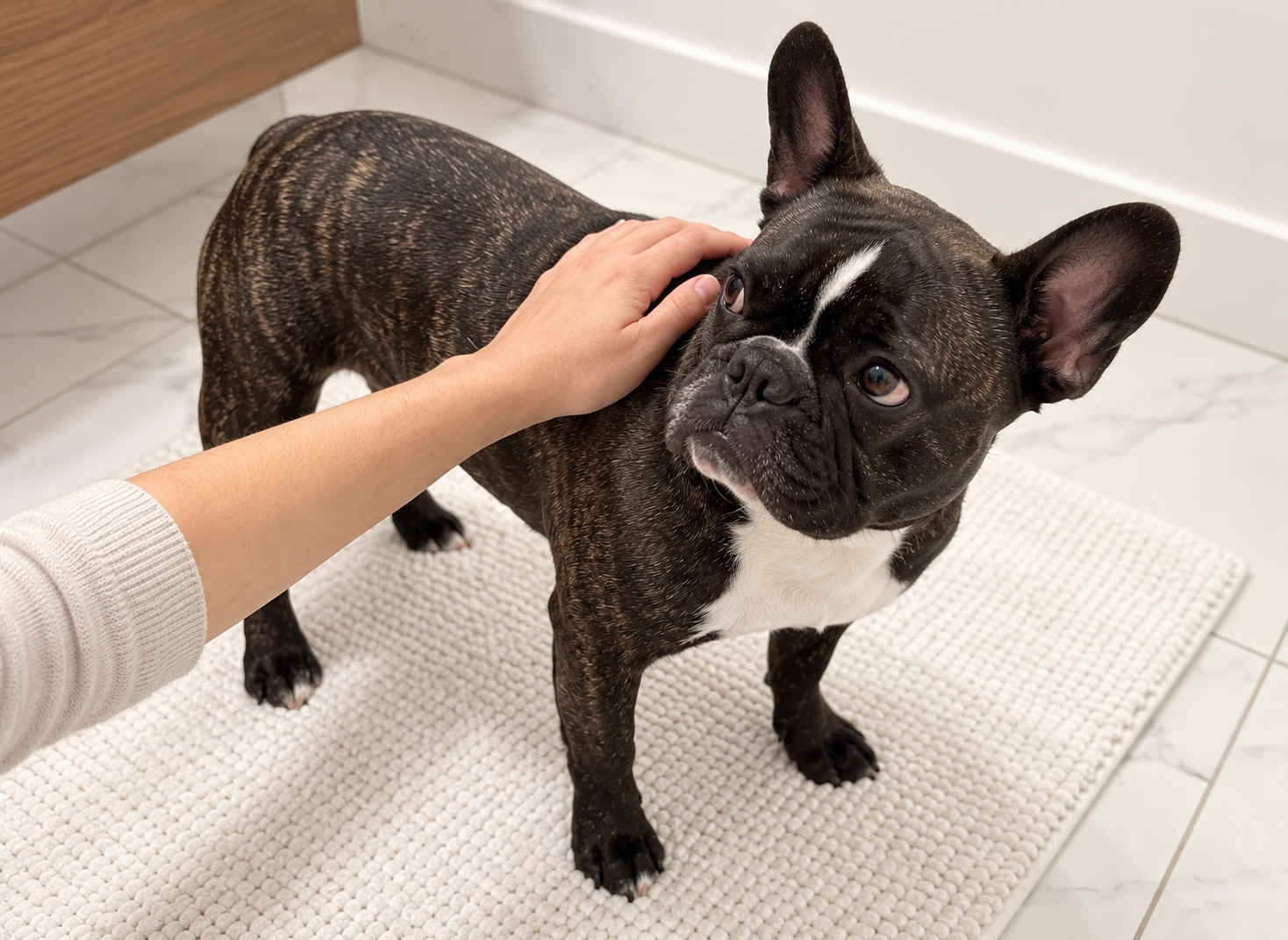
Leave with instructions you can follow
Treatment can involve an appropriate topical antifungal, and some dogs need systemic medication. The choice depends on the case. More products are not automatically a better plan, and this guide deliberately does not provide drug doses or a do-it-yourself shampoo recipe.
Before leaving the appointment, I would ask the team to write down:
- The job of each item: which addresses yeast, which controls discomfort and which manages an underlying condition?
- The application: exactly where it goes, how often, any contact time, and whether it must be rinsed or dried.
- The limits: which areas to avoid and what to do if applying it is painful or impractical.
- The follow-up: when to return and which changes mean calling sooner.
Tell the clinic if bathing is difficult, the dog resists handling or you cannot manage the schedule. An honest description of what is feasible helps the team adjust the plan. Do not silently substitute a familiar grooming product for the prescribed treatment.
What the recheck can tell you
The consensus guideline considers both the dog’s clinical improvement and the yeast findings after treatment. If yeast is controlled but discomfort continues, another skin problem may still need attention. If neither improves, the vet needs to reassess the diagnosis and how treatment has been delivered, rather than assuming the answer is a stronger product.
AAHA’s diagnostic approach also pairs treatment of secondary infections with investigation of the underlying itchy-skin disease. It includes checking the response and verifying medication use.
Bring the actual products and a short record: dates used, missed applications, any reaction, and whether sleep or licking changed. Take comparable photos in ordinary light if your dog is comfortable. Do not provoke scratching or handle sore areas to make a better picture.
If the problem keeps returning
A recurrence deserves a review of the underlying condition, not an automatic repeat of old medicine. The university handbook emphasizes finding and managing predisposing disease and rechecking before treatment is stopped.
Ask whether the maintenance plan has a separate purpose from treatment of the current flare. Our wrinkle-cleaning guide covers ordinary fold care, but ordinary cleaning is not a substitute for treating an inflamed fold.
Contact the clinic sooner for painful, broken or worsening skin, or a dog who cannot settle or seems unwell. Tell them what changed so they can judge urgency. Do not wait for the scheduled visit while repeatedly adding home remedies.
Common questions
Does a corn-chip smell prove yeast infection?
No. Odor is an observation to report, not a diagnosis. The examination and appropriate samples provide more useful information.
Can I stop when the smell goes away?
Follow the clinic’s instructions and agreed recheck rather than using smell alone to decide. Ask before stopping or restarting treatment.
Does yeast mean my Frenchie has a food allergy?
Not by itself. An underlying problem may need investigation, but finding yeast does not identify a food ingredient or justify repeated unsupervised diet changes.