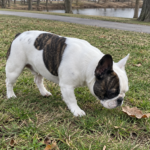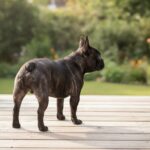

Every few weeks at the park, someone spots a silvery Frenchie trotting past and whispers “is that one of those rare grey ones?” like they’ve seen a unicorn. I used to nod along. Then I fell down the coat genetics rabbit hole one night, Nina snoring against my leg, and found out the awkward truth.
A grey French Bulldog usually means the slate-colored coat breeders call blue. Grey describes its appearance; it is not a separate breed. If you’re shopping for a puppy, or just wondering why the identical dog gets three different labels in three different ads, here’s the untangling.
Key takeaways
- Grey and blue usually describe the same dilute coat.
- Color names and photos cannot confirm a puppy’s genetics or health.
- Check health records and breeder practices before paying a color premium; learn how grey fits among French Bulldog colors.

Is grey a real French Bulldog color?
Grey, or gray, is a reasonable everyday description of a blue Frenchie’s coat. It does not identify a separate genetic color. Black pigment can be diluted to grey-blue; UC Davis explains that two dilution variants are needed, often shortened to d/d. Several variants exist, so that shorthand is not the whole laboratory result.
A photo can suggest a color, but lighting and other coat genes affect what you see. Ask for the actual test report if a seller’s genetic claim matters to your decision.
Grey vs blue, lilac and platinum French Bulldogs
These labels overlap, and sellers do not always use them consistently. This comparison is a starting point, not a way to identify a dog’s genotype from a picture.
| Color label | What it usually describes | What to check |
|---|---|---|
| Grey / gray | The silvery or slate appearance commonly called blue | Do not treat the spelling as a separate color |
| Blue | Diluted black pigment | The D-locus result, if genetic confirmation is needed |
| Lilac / Isabella | Labels used for diluted brown shades | Which brown and dilution variants the seller actually means |
| Platinum | A marketing label often used for a pale cream dog carrying additional color variants | The full report; a pale coat or nose alone does not prove the combination |
| Mouse | The breed standard’s term for disqualifying dilute coloration | The conformation standard rather than a sales description |
Swipe or scroll sideways to see all columns.
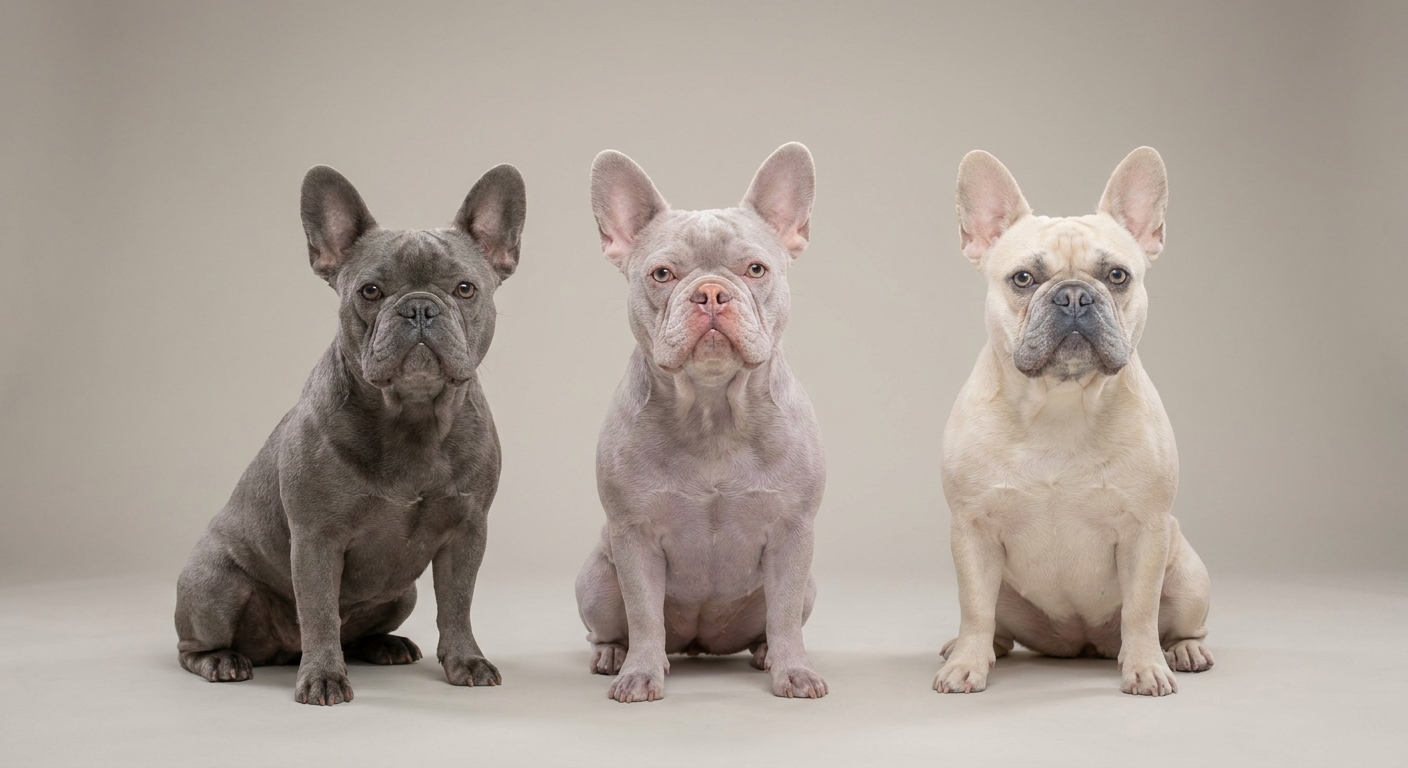
Brown genetics are not just one b/b formula in this breed. UC Davis distinguishes cocoa from the usual brown variants, and other genes can alter the visible result. That is why I would ask a breeder to explain the report instead of paying extra for a longer color name.
Adding “and tan” does not erase the blue-versus-lilac distinction: the base shade and the tan-point pattern describe different features. The UC Davis Agouti explanation addresses pigment distribution, while dilution and brown-related variants need separate interpretation. For the pattern terminology, see the blue-and-tan section of our colors guide. Ask what a seller means by lilac or isabella rather than assuming the names specify one identical genetic combination.
Grey French Bulldog health: color dilution alopecia
Some dilute dogs develop color dilution alopecia (CDA), with thinning hair and sometimes flaky or itchy skin. Signs can start from six months onward, so a normal puppy coat is not a guarantee. VCA describes CDA as manageable but not curable; treatment addresses the individual dog’s skin problems.
When I asked our vet how she’d shop for a dilute puppy, her answer was simple: look at the parents’ coats in person, both of them, and be suspicious if you’re only ever shown puppy photos. That is useful background, but full coats do not rule out future CDA in a puppy. Ask about family skin history and veterinary records too.
Do not diagnose every bald patch as CDA. A vet can investigate hair loss and irritation. The breed’s other health issues, including breathing and spinal concerns, still matter whatever the coat color.

Not a standard color, and what that means for the price
The French Bull Dog Club of America’s color guidance identifies blue dilution as the “mouse” color disqualified by the conformation standard. Show eligibility and registration are different questions; registration papers should never be treated as a health guarantee.
There is no dependable price attached to the word grey alone. Location, age, breeder practices and what is included all affect asking prices. Compare written quotes and health records, and budget for ongoing care rather than treating a color premium as proof of quality.
Pressure to pay immediately, inconsistent identity details or refusal to provide verifiable records deserves investigation. Price alone does not prove a scam, whether it is unusually low or unusually high. Our color guide can help untangle the labels before you compare listings.

FAQs about grey French Bulldogs
How much does a grey French Bulldog cost?
Prices vary by location, breeder, age and what is included. Ask for a written breakdown and health records instead of relying on one breed-wide price range. The label grey does not establish a puppy’s value, quality or future health.
Are grey French Bulldogs rare?
Blue dilution is well established in French Bulldogs. A seller calling a puppy rare does not show how common that color is locally or justify a premium. Ask what the claim means and focus on the individual dog and breeder.
What’s the difference between a grey and a blue French Bulldog?
In everyday listings, both usually refer to the same slate-colored dilute coat. Grey describes what you see; blue is the common coat-color term. Photos and labels cannot confirm the complete genetic result.
Do grey French Bulldogs have blue eyes?
Some have light eyes, particularly as puppies, but a grey coat does not guarantee blue eyes in adulthood. Do not choose a puppy on a promise that its current eye color will stay unchanged.
Is a grey French Bulldog recognized by the AKC?
Blue or mouse is a disqualifying color under the conformation standard. That is different from registration eligibility. Check the specific paperwork and rules rather than assuming a registered dog meets the show standard.
Are grey French Bulldogs unhealthy?
A coat color cannot tell you whether an individual dog is healthy. CDA is a concern in some dilute dogs, while breed-wide health problems still apply. Full-coated parents do not guarantee a puppy will avoid skin disease.
What is the healthiest French Bulldog color?
No color is a substitute for evaluating breathing, movement, skin, family history and appropriate health screening. Ask a vet to assess the individual dog; a standard color alone is not a clean bill of health.