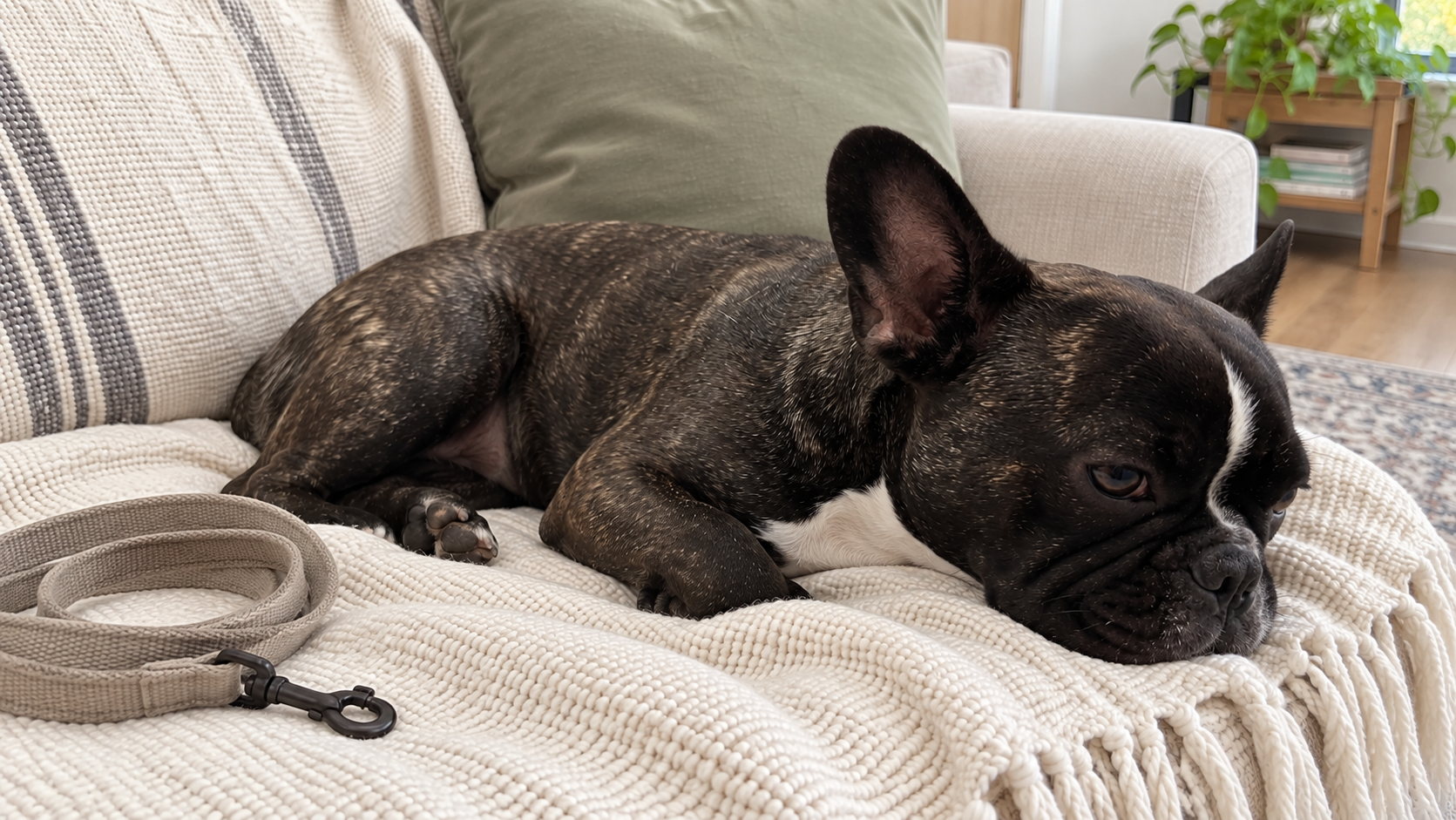

A French Bulldog’s price tag can reflect real veterinary work, careful puppy raising and strong demand. It can also include a hefty premium for a fashionable color. The amount alone doesn’t tell you which you’re paying for.
Before stretching your budget for the puppy, work through the purchase and ongoing costs of a French Bulldog. Money spent upfront won’t cover the vet visits, food and other care still to come.
Key takeaways
- Breeding care, possible surgical delivery, screening and raising a litter can all contribute to a Frenchie’s price.
- Demand and appearance premiums also matter. A higher price never guarantees responsible breeding or good health.
- Verify the seller and health records, then budget for lifelong care before committing.
Why are French Bulldogs so expensive to buy?
The explanation has two parts: what it costs to breed and raise the dogs, and what buyers are willing to pay. Those aren’t the same number.
Some breeders invest in extensive screening, reproductive veterinary care, safe facilities and careful early socialization. Others may charge a similar amount while doing much less. Ask what is documented for the particular litter rather than assuming every expensive puppy has received the same care.
Reproductive veterinary care can add substantial costs
French Bulldogs have an important risk of difficult birth, known as dystocia. Royal Veterinary College research using UK emergency-practice records found markedly higher odds of dystocia in French Bulldogs than in crossbred dogs, and a greater likelihood of cesarean delivery among affected French Bulldogs.
That supports concern about birthing risk. It doesn’t establish that every Frenchie must be born by surgery, or provide a current percentage for all French Bulldog litters worldwide. A surgical delivery involves anesthesia, a veterinary team and care for the mother and puppies. The need for that help is a welfare issue, not a luxury feature.
Assisted breeding can also involve testing, semen handling and artificial insemination. The AKC’s explanation of insemination methods notes several reasons for using them, including physical difficulties, behavior and the distance between dogs. It is too broad to say all Frenchies are unable to mate naturally, or that insemination always proves physical inability.
A veterinarian should plan reproductive care around the individual dogs. A buyer doesn’t need a do-it-yourself breeding schedule; they need evidence that the mother’s health and recovery were taken seriously.
Litter size changes how costs are spread
A breeder’s expenses don’t all rise or fall with the number of puppies. Screening the parents and caring for the mother still cost money when a litter is small. Dividing those shared expenses among fewer puppies can increase the cost per puppy.
Litter size also varies. A study of registered Norwegian litters across 224 breeds found that breed size, the mother’s age and mating method influenced litter size. That is a better reason to be cautious about neat cost calculations than to promise every Frenchie litter contains exactly three or four puppies.
Screening and early care take time and money
Health testing before breeding is different from a puppy getting a routine vet check. Both matter, but they answer different questions.
The French Bull Dog Club of America’s testing guidance lists hip, eye, patella and cardiac evaluations for its CHIC requirements, with additional recommended tests including respiratory function grading. Ask for the actual reports for both parents, with names or identification that match the dogs.
The Orthopedic Foundation for Animals explains that a CHIC number means the required tests were completed and made public. It does not mean every result was normal. A DNA panel, a registration certificate and a CHIC number aren’t interchangeable health guarantees.
Puppies also need appropriate veterinary care, monitoring, feeding, cleaning and positive early experiences. The AKC’s responsible-breeding guidance describes the work involved in caring for a mother and litter. Ask how those needs were met rather than judging the nursery by a polished puppy photograph.
The part of the price that comes from demand
The French Bulldog topped the AKC’s 2025 registration rankings. That measures AKC registrations, not every dog in America, but it helps explain why so many buyers encounter Frenchie advertisements.
Popularity can influence asking prices. So can geography, the dog’s age, what is included and whether the sale includes breeding rights. These differences make a universal “fair price” difficult to defend.
Owners notice that problem. In a discussion comparing US and European prices, one person asked why advertised costs seemed so different, while a respondent described reproductive-care expenses. Those experiences raise useful questions, but a few posts aren’t a market survey or evidence that one country produces healthier puppies.
Why do rare colors cost more?
Some sellers attach premiums to particular colors, patterns or coat types because buyers want them. A label such as “rare,” “exotic” or “fluffy” tells you what is being marketed; it doesn’t tell you whether the dog breathes comfortably or whether the parents were appropriately screened.
Don’t assume every nonstandard color has the same genetic risk, either. Ask what testing is relevant to the actual pairing and discuss the records with a vet. The purchasing question is whether the evidence supports the dog’s health and care, not whether the seller has invented an impressive color name.
How to judge a price without using it as a health score
A very low advertised price deserves questions, especially if it comes with urgency, evasive answers or unexpected fees. A high price deserves the same scrutiny. Legitimate rescue and private rehoming can have modest fees, while poor breeding or a scam can carry a premium price.
Before paying, ask:
- Who is responsible for this dog? Verify the breeder or rescue independently and understand where the dog was raised.
- Can I see the actual records? Review parent screening, the puppy’s veterinary history and any disclosed concerns.
- What does the agreement include? Read the care, return and health provisions before a deposit makes you feel committed.
- What can I observe? Arrange an appropriate meeting and ask about the mother, early handling and the dog’s normal environment. A video call alone isn’t complete verification.
- Am I being rushed? Pressure to pay immediately is a reason to pause, not proof that this is your only chance.
The US Federal Trade Commission’s pet-scam advice recommends checking the seller and watching for demands to use hard-to-recover payment methods, including gift cards, cryptocurrency and wire-transfer services. A convincing photo isn’t proof that the seller has the puppy.
The bills after bringing a Frenchie home
Plan for food, preventive care, supplies and any training, grooming, walking or boarding your household needs. Then consider the costs that are harder to predict.
Modern veterinary research documents increased French Bulldog risk for several airway, skin and other conditions. It doesn’t provide a personal lifetime bill. Some dogs need major treatment; others have different needs, and local veterinary prices vary.
For Nina or another Frenchie, a realistic budget leaves room for care beyond the purchase price. Paying more for the puppy does not purchase protection from future illness.
Get local veterinary estimates and compare insurance coverage and exclusions using the actual dog’s details. Check deductibles, reimbursement limits, waiting periods and pre-existing-condition rules. Keep access to funds for expenses a policy won’t pay, and remember that savings take time to build.
Adoption is worth considering
Breed rescues and general shelters may have French Bulldogs needing homes. Read the individual dog’s medical and behavior notes and ask what support, treatment and follow-up are included. An adult in foster care may come with useful observations about daily life, even when parts of the earlier history are unknown.
The French Bulldog Rescue Network, for example, sets adoption fees according to age and health. Its policy is specific to that organization. Adoption can reduce the upfront cost, but it doesn’t remove the responsibility or expense of ongoing care.
FAQs about why French Bulldogs are so expensive
How much should I pay for a French Bulldog?
Compare verifiable sources, records, included care and written terms in your area. There is no single price that certifies good breeding. Keep enough of the budget for the dog’s needs after purchase.
Can French Bulldogs breed naturally?
Some can. Assisted mating and surgical delivery are separate issues, and neither is universal. The breed’s increased birthing risk makes veterinary reproductive planning essential.
Are expensive French Bulldogs healthier?
Price alone cannot predict health. Relevant screening and responsible breeding decisions provide information that a premium price doesn’t, but even carefully bred puppies can develop illness.
Which color French Bulldog is most expensive?
There isn’t a universal ranking. Sellers and markets price colors differently, and asking prices are not the same as completed sales. A color premium is not a medical benefit.
Is a cheap French Bulldog always a scam?
No. Low-cost adoption or rehoming can be legitimate. Verify identity, records and the dog itself; pressure, inconsistent details and suspicious payment demands matter more than the number alone.
Why do some breeders charge more for females?
Breeding rights or seller demand may affect pricing. Ask what the contract actually includes. For a pet home, sex and price don’t replace assessment of the individual dog’s health and temperament.
Are French Bulldogs expensive to maintain?
They can be, particularly when treatment is needed. Build a budget from local care and insurance quotes rather than assuming a small dog will be inexpensive or relying on a generic lifetime total.
Is a French Bulldog worth the cost?
That depends on your household’s time, finances and ability to meet the dog’s needs. If buying the puppy leaves no room for treatment or everyday care, waiting or considering another suitable dog is a kinder decision.