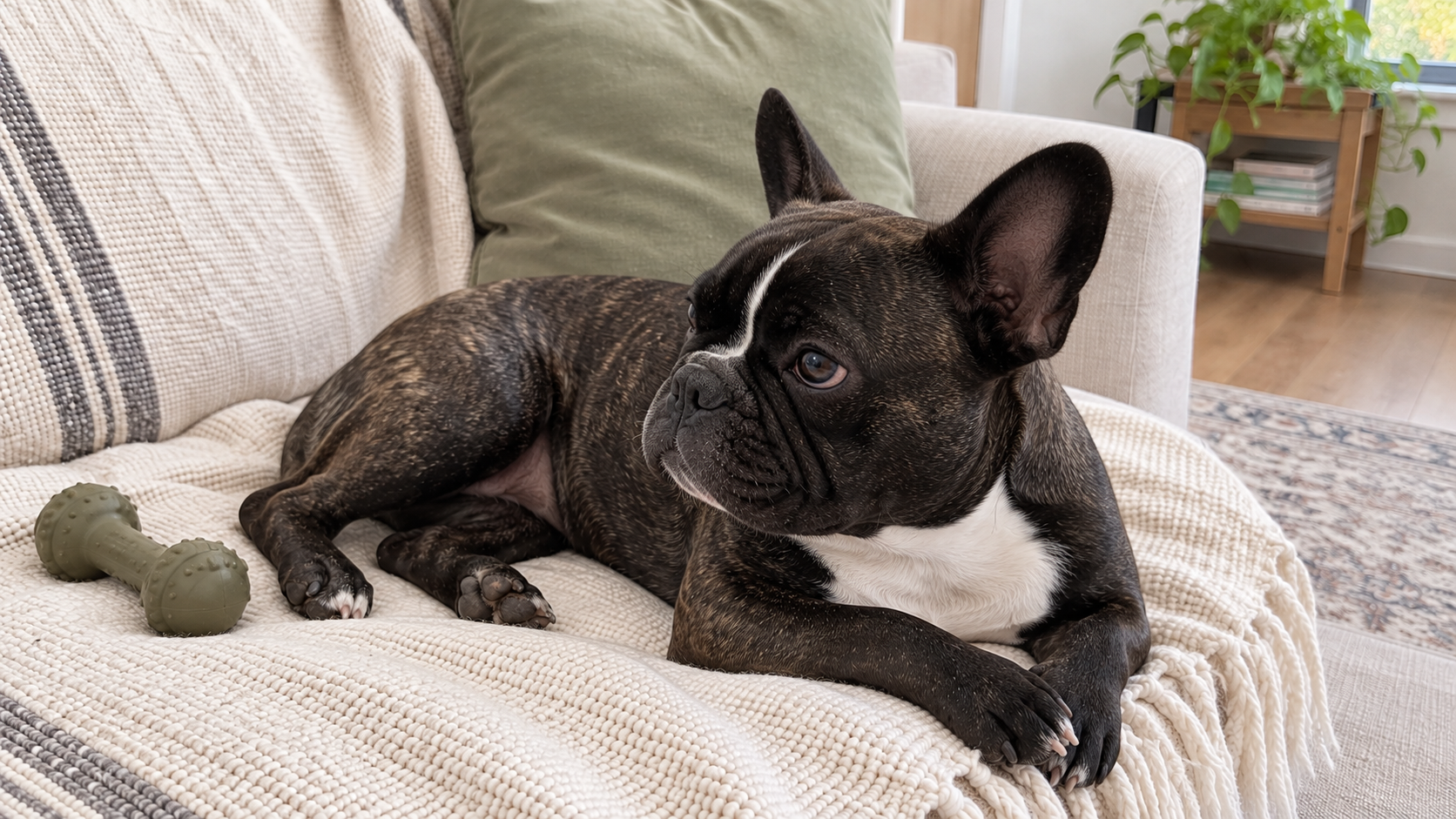

A Frenchie who growls over a chew needs space, even if they’re affectionate the rest of the day. French Bulldogs are companion dogs, but they can show aggression and they can bite. Their breed name can’t tell you whether an individual dog is safe in a particular situation.
If you’re working on ordinary manners, practice reward-based French Bulldog training in calm, comfortable settings. Growling, snapping or lunging around people, food or other animals needs a safety plan as well as training.
Key takeaways
- French Bulldogs can show aggression; assess the individual dog and situation rather than relying on breed reputation.
- Give a growling dog space. Avoid punishment, forced greetings and taking guarded items.
- Arrange veterinary assessment for new or escalating aggression, and seek qualified behavior help before anyone gets hurt.
Are French Bulldogs an aggressive breed?
The French Bull Dog Club of America describes the breed as an affectionate companion. That describes a broad breed ideal, not a promise about every puppy or adult.
Calling Frenchies “one of the least aggressive breeds” without a clearly defined, suitable comparison offers false reassurance. The more useful questions are what this dog has done, what happened just before it, whether someone could be injured, and whether health or stress has changed.
The American Veterinary Medical Association’s bite-prevention advice emphasizes that any dog can bite. Small size and a familiar face don’t remove that possibility.
Play, puppy biting or a warning?
Sound alone isn’t enough. Growling can occur in play, but it can also ask someone to stop approaching. Read the whole body-language picture and end the interaction calmly if you’re unsure.
| What you see | What it may mean | Safer response |
|---|---|---|
| Loose, bouncy play with pauses | Play is possible, including some growling | Keep it comfortable for everyone; allow breaks and a way to leave |
| Mouthing during puppy play | Often play or exploration, but not automatically harmless | Offer an appropriate toy and calmly end rough play |
| Freezing, staring or hovering over food | Possible guarding, even before a growl | Stop approaching and create space |
| Snapping, lunging or biting | A meaningful injury risk | Prevent further contact and arrange professional assessment |
VCA’s puppy-biting guidance recommends consistent redirection and ending play when biting becomes rough. Don’t use age alone to dismiss a puppy who stiffens, guards objects or repeatedly injures someone.
A dog rolling onto their back, wagging or licking afterward hasn’t necessarily been enjoying the interaction. If one dog keeps pursuing another who is trying to get away, the fact that it started as play doesn’t make continuing it a good idea.
Why a Frenchie might growl, snap or lunge
Guarding food, toys or resting places
Resource guarding can involve a bowl, chew, stolen tissue, bed or access to a person. The dog may freeze, stare, eat faster or position their body over the item before escalating. Don’t test whether they “really mean it” by reaching closer.
In one Frenchie owner discussion, the concern was a dog who obeyed familiar cues but still guarded everyday objects. The owner later reported improvement after a change in daycare. It is one account, with no independent clinical diagnosis, but it illustrates why “she knows sit” doesn’t explain the whole problem.
Fear, frustration and difficult encounters
A dog may react when cornered, restrained, approached by a stranger or unable to move away from another dog. Barking and lunging on a leash can involve fear, frustration or several factors together. Being friendly off leash does not prove the next on-leash reaction is harmless.
Dogs Trust identifies several potential triggers, including fear, guarding, pain and frustration. Early experiences and genetics matter too, so neither “bad owner” nor “stubborn breed” is an adequate diagnosis.
Pain or another medical problem
A sudden change deserves a veterinary appointment. A dog who now snaps during lifting, grooming or touch may be uncomfortable; don’t keep pressing the spot to investigate.
The MSD Veterinary Manual includes medical assessment in behavior diagnosis. Pain, sensory changes and other illness can alter behavior. That doesn’t mean every new growl is caused by pain, or that treating a medical issue automatically removes all learned fear.
Tell the clinic about the behavior before the visit so it can plan safer handling. If aggression comes with severe pain, collapse, disorientation or other acute illness, seek urgent veterinary advice.
What to do now if your French Bulldog is showing aggression
- Stop the interaction. Give the dog distance without shouting, looming, grabbing their collar or reaching for the guarded item. Move other people and animals away when you can do so safely.
- Prevent a repeat. Use secure doors or suitable barriers, feed pets separately, and keep children away from food, chews and resting dogs. Arrange visitors so the dog doesn’t have to greet them.
- Write down the pattern. Note what happened beforehand, who was present, what the dog did and how the situation ended. Existing footage may help a professional, but don’t provoke an episode to film it.
- Contact your vet and a qualified behavior professional. Share the full history, including air-snaps and previous bites. You don’t need to wait for broken skin to ask for help.
VCA’s resource-guarding advice specifically warns against confronting a guarding dog. If growling, snarling, snapping or lunging is already occurring, seek guidance before trying food-bowl exercises.
That boundary matters. “Trade up” is often offered as a quick internet fix, but walking toward a dog already guarding a chew can put your hand in danger. A professional can choose safe distances, barriers and gradual exercises for that particular dog.
Training that helps without confrontation
The American Veterinary Society of Animal Behavior recommends reward-based methods for training and behavior modification. Avoid alpha rolls, shock or prong collars, leash jerks and punishment for growling. These can add fear and conflict; suppressing a warning doesn’t resolve the underlying problem.
A behavior plan may combine management with carefully paced work that changes how the dog feels about a trigger. The dog should be able to stay comfortable rather than being forced to endure close exposure. Flooding a worried Frenchie with visitors or taking them to a busy dog park isn’t a shortcut to socialization.
For Nina or any other Frenchie, a friendly reputation is no reason to push through a warning. The immediate goal is a safer situation.
Keep normal routines, rest and suitable enrichment, but don’t try to exhaust a Frenchie into good behavior. Exercise doesn’t treat every cause of aggression, and breathing difficulty or overheating is never a training strategy.
When professional help becomes urgent
Get help promptly for a bite, escalating incidents, aggression toward a child, repeated attacks on another pet, or a situation you can’t safely manage. Keep the dog separated from potential targets while arranging advice. Don’t rely on supervision alone when a child is a known target.
The American College of Veterinary Behaviorists’ advice after a bite explains why medical assessment and an individualized behavior plan matter. A board-certified veterinary behaviorist can assess health and behavior together; your regular vet can help coordinate care if a specialist isn’t nearby. Medication may be appropriate in some cases, under veterinary direction.
If a person has been bitten, arrange appropriate medical care as well as preventing another incident. No article can promise that a dog with a bite history will become safe in every setting.
FAQs about French Bulldog aggression
Why is my French Bulldog suddenly aggressive?
Possible contributors include pain, illness, fear and changes in the environment. Prevent further incidents and arrange veterinary assessment rather than assuming the dog is testing your authority.
Are French Bulldogs aggressive toward other dogs?
Some are, in particular situations or more broadly. Don’t force greetings or use an off-leash meeting to test the cause. A professional can assess the pattern and plan safer management.
Are French Bulldogs safe with kids?
No breed guarantees safety. AVMA guidance calls for active supervision and respecting eating and sleeping dogs. Set clear boundaries between children and a Frenchie, including a resting space children cannot enter. With a known threat toward a child, use secure separation and professional advice.
Should I punish my Frenchie for growling?
No. Stop the interaction, give space and investigate what prompted it. Punishment can increase fear or reduce warning signals without making the situation safer.
Will my puppy grow out of biting?
Play mouthing needs consistent teaching. Guarding, freezing, escalating bites or injuries need assessment, even in a young puppy. Waiting for an age milestone is not a safety plan.
Does neutering stop aggression?
It isn’t a dependable general treatment. VCA’s veterinary guidance on neutering and behavior emphasizes understanding the reason for aggression rather than routinely treating it with surgery. Discuss the decision with your vet alongside the behavior plan.
What is rage syndrome in French Bulldogs?
Don’t diagnose a dog from that internet label or a video. Sudden, severe or apparently unexplained aggression needs veterinary investigation, including possible medical causes, and immediate steps to prevent injury.
Are French Bulldogs attack dogs or a restricted breed?
They are companion dogs, but any individual can bite. Housing, insurance and local rules need their own checks; a breed description does not establish what a particular policy permits.