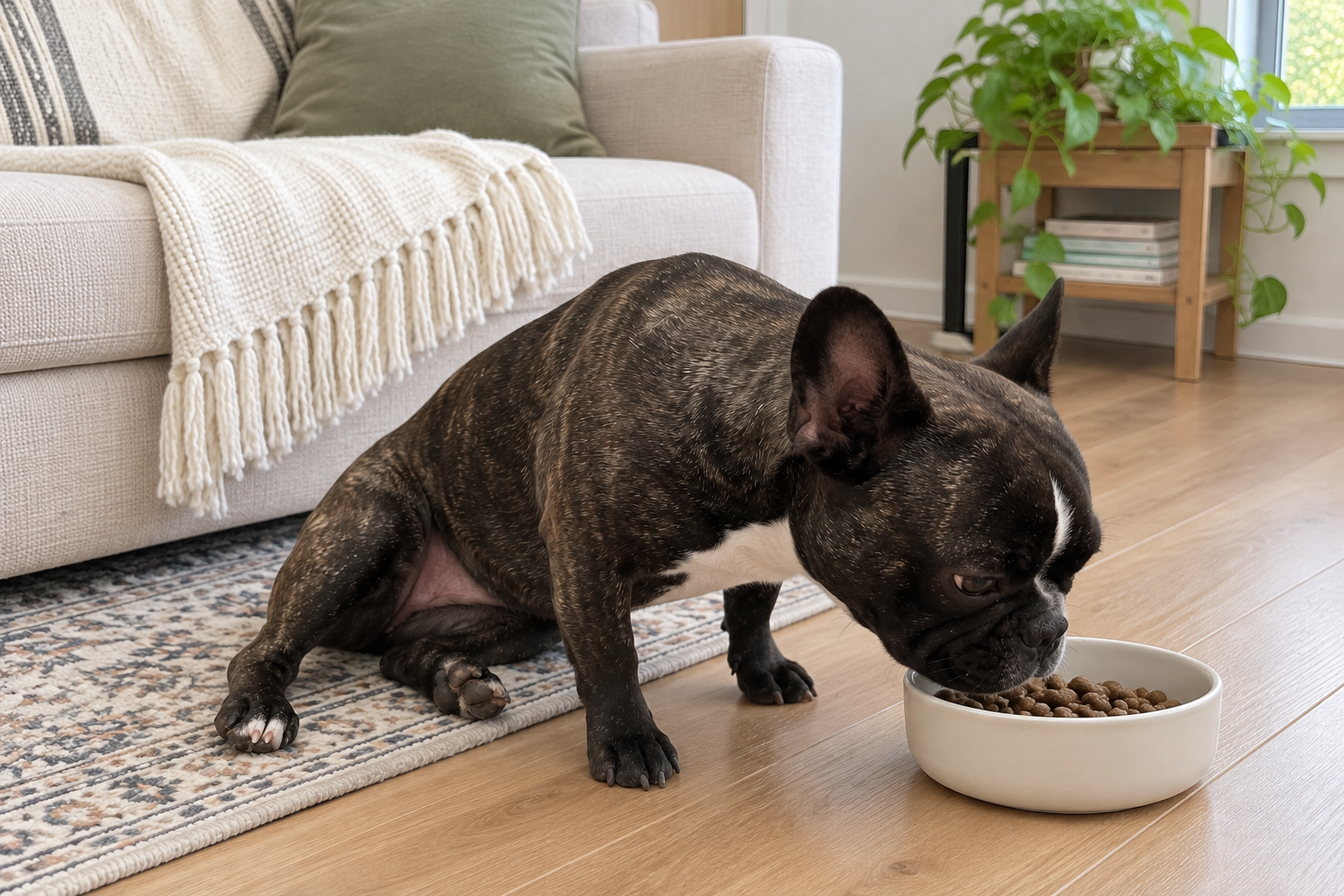

Let’s just name it: Frenchies are gas machines, and nobody warns you before you fall in love with one. Nina can clear a room with a look of complete innocence on her face, like she had nothing to do with it. After years of living downwind, I know it is tempting to laugh and leave it there. A change in the pattern still deserves attention. Here’s why your French Bulldog farts so much, and what actually quiets it down.
If meals seem connected, our food guide for a gassy Frenchie explains the questions to discuss before switching recipes.
Key takeaways
- Swallowed air, intestinal fermentation and individual digestive problems can all contribute to gas.
- Track meals, extras and symptoms; expensive ingredients or a probiotic are not automatic fixes.
- Persistent symptoms need a vet check. A painful swollen abdomen, repeated unproductive retching or collapse needs urgent veterinary help.
Why French Bulldogs fart so much
VCA explains that swallowed air and gas produced in the digestive tract are different contributors. Eating quickly can increase air swallowing; bacterial fermentation can also produce gas. Sulfur-containing gases account for much of the odor, so swallowed air and smell are not the same thing.
Nina’s reputation in our living room does not diagnose another Frenchie’s gut. How much gas is usual varies between dogs, and persistent excess should not be dismissed as simply the breed.
What may make the gas worse
- Fast eating or competition. Note whether meals are rushed or another pet is nearby.
- Recent diet changes and extras. Include treats, chews, scraps and supplements in the food history.
- The individual recipe. Some ingredients and amounts may contribute, but “cheap,” “by-product” and “filler” do not diagnose poor digestibility.
- An underlying problem. Ongoing diarrhea, weight change or discomfort deserves assessment. Gas alone does not identify an allergy.
How to reduce Frenchie gas
Keep a short record of food, extras, eating speed and symptoms. Ask your vet whether a gradual diet change is appropriate, rather than swapping several foods and supplements at once. A complete recipe that suits the individual matters more than an expensive ingredient list.
If dinner is rushed, a comfortable slow feeder for a flat face may help with pace. Stop using it if reaching the food is difficult or frustrating. Feeding pets separately can also make meals calmer.
A probiotic is not a universal gut reset. Discuss the specific product and reason for using it with your vet. Do not let supplements delay assessment of persistent digestive symptoms.
A painful or swollen belly, repeated retching without bringing anything up, collapse or marked distress needs urgent veterinary help. Vomiting, diarrhea, weight loss or persistent new gas also warrants a vet call. The health guide gives wider context, but does not replace that assessment.
FAQs about French Bulldog gas
Why does my French Bulldog fart so much?
Possible contributors include swallowed air, fermentation, diet changes and digestive problems. Look at the pattern and other symptoms rather than assuming one cause from the breed.
Are French Bulldogs known for being gassy?
Owners often report it, including in our house with Nina. That reputation is not a reason to ignore a new or persistent change, especially with discomfort or altered stools.
How do I make my French Bulldog less gassy?
Review meals and extras, make eating comfortable and discuss persistent problems with your vet. Change diets gradually when advised; do not stack new foods and supplements hoping for an instant fix.
Why do my Frenchie’s farts smell so bad?
Odor can come from sulfur-containing gases produced in digestion. The smell alone does not identify an offending food or prove an allergy. Record changes and associated symptoms.
Can a probiotic help with Frenchie gas?
It depends on the product, the dog and the cause. Ask your vet about a specific indication rather than assuming every probiotic will help.
When should I worry about my Frenchie’s gas?
Seek urgent help for a painful swollen abdomen, repeated unproductive retching, collapse or marked distress. Persistent new gas with vomiting, diarrhea, weight loss or discomfort also needs veterinary advice.