
A French Bulldog tail pocket is a fold or recess around the base of the tail where moisture, loose hair and debris can collect. Some are shallow, some are deeply tucked away, and some Frenchies do not have an obvious pocket. Comfortable, accessible skin can be cleaned gently; painful, bleeding or swollen skin needs a vet.
The shape of a French Bulldog’s tail helps explain why the fold exists. This article focuses on caring for that skin, spotting trouble and knowing when home cleaning should stop.
Key takeaways
- Ask your vet to show you the tail folds; never pull or probe.
- Gently clean accessible, comfortable skin and follow the recommended drying routine.
- Pain, blood, discharge or recurring odor needs examination, not harder scrubbing.
Stop cleaning and call the vet if it hurts
Arrange a veterinary examination if you notice a persistent unpleasant smell, red or raw skin, discharge, bleeding, swelling, repeated licking or scooting, or pain when the tail area is touched. Severe pain, rapidly worsening swelling, difficulty passing stool, or a dog who seems generally unwell calls for prompt same-day advice.
These signs can reflect inflammation, infection or another rear-end problem. A brown wipe or a “yeasty” smell cannot tell you which organism is involved. Veterinarian Roy Kraemer’s tail-fold guidance specifically advises against forcing a finger or wipe into a sore or inaccessible pocket.
If your dog suddenly objects, stop. Holding them more firmly so you can finish the job risks worsening pain and getting bitten. Let the clinic know that handling the area is difficult.
Where is the tail pocket?
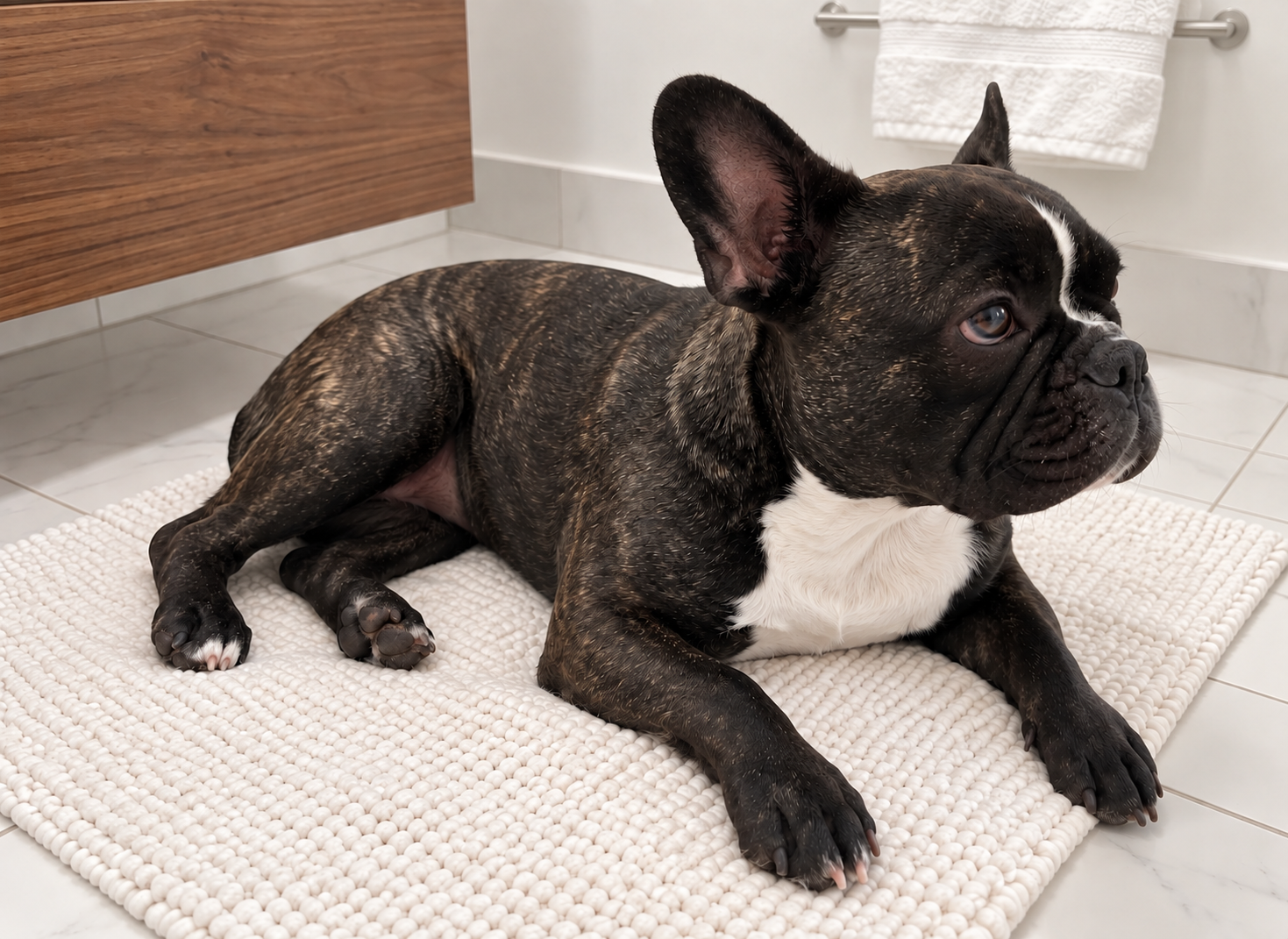
Look around the tail base, especially beneath and beside a tightly curled tail. The pocket is an external skin fold, not the anus and not an anal gland. It may be partly hidden by the way the tail rests against the body.
A screw or corkscrew tail can contain abnormally shaped or fused tail vertebrae. The resulting tight folds may trap material and rub against one another. VCA’s explanation of corkscrew tails describes how that anatomy can lead to recurring skin disease and, in severe cases, interfere with passing feces.
Do not pull up a fixed tail to see what is underneath. If the fold is hard to locate, ask your vet to show you at an examination. A puppy’s body changes as they grow, so let the vet reassess the area rather than assuming the adult cleaning routine will be obvious from an early photograph.
A gentle cleaning routine for healthy tail folds
Start with a demonstration tailored to your dog’s folds. A routine that is easy for a shallow, comfortable fold may be unsuitable for a deeply recessed tail. The goal is clean, comfortable skin, without friction or leftover moisture.
1. Set out the supplies first
Have clean, soft pads or gauze, a separate drying cloth and the cleanser your vet recommends within reach. For simple cleaning, your clinic may advise saline. Use a commercial wipe only if the product is appropriate for this area and your dog’s skin.
Keep medicated products separate from ordinary grooming wipes. An antiseptic name on the packet does not tell you the right concentration, contact time or frequency. PDSA recommends a vet-directed cleaning approach and regular attention to both cleaning and drying.
2. Let your dog stand comfortably
Choose a nonslip surface and a quiet moment. Keep the session brief. If you need to wrestle, repeatedly lift the tail or dig for a hidden crease, pause and ask for help rather than turning routine care into an ordeal.
3. Clean only what you can reach gently
Use light wiping to lift away accessible debris. Change to a clean part of the pad as needed, and avoid carrying fecal material from around the anus into the fold. Do not scrape at crusts, scrub until the skin changes color, or push a cotton swab deep into the pocket.
Notice what has changed from your dog’s usual skin: dampness, tenderness, redness or discharge. Healthy skin can be naturally pigmented; it does not have to look pale to be healthy. A photograph may help track a change, provided taking it does not hurt your dog.
4. Follow the drying directions
For ordinary cleaning, gently blot away moisture with a fresh dry pad or soft cloth. Avoid rubbing. If your vet prescribed a medicated cleanser, follow its contact-time and drying instructions rather than immediately wiping the medicine off.
Do not direct hot air into the fold. If you cannot reach the area comfortably enough to clean and dry it, that is something for the vet to assess.
5. Finish before your dog is fed up
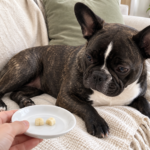
A small suitable reward can make calm handling easier to repeat. Nina’s chicken allergy is a reminder that a grooming reward still needs the same ingredient check as any other treat. Use something your dog already tolerates, rather than adding a new snack and a new skin product on the same day.
How often should you clean a Frenchie’s tail pocket?
There is no one schedule that fits every pocket. Depth, moisture, stool contamination, skin health and the product being used all matter. Some dogs need daily care under veterinary direction; others need less frequent cleaning. Checking the area regularly helps you notice a change before deciding whether it needs wiping.
Ask your vet for two separate instructions: what to do when the skin is healthy, and what to do during a flare-up. Do not turn a mild maintenance routine into repeated daily scrubbing because a smell keeps returning.
The Royal Veterinary College’s dermatology service notes that dogs with these folds can need substantial ongoing skin care, even without allergic skin disease. Recurring problems are not automatically proof that an owner has been careless.
What a tail-pocket infection needs
The vet will examine the fold and nearby structures. A sample viewed under a microscope, called cytology, can help identify bacterial or yeast involvement. Recurrent or complicated cases may need further testing, including a culture.
Treatment can include an appropriate topical antiseptic, control of inflammation or pain, and prevention of licking. Oral antibiotics are not required for every irritated fold. The ISCAID canine skin-infection guidelines emphasize diagnosing the type of disease and using topical treatment where appropriate, rather than assuming every skin problem needs systemic antibiotics.
Follow the prescribed course and recheck plan. If the skin seems better but the odor, tenderness or discharge returns, tell the clinic instead of restarting an old prescription. Persistent disease may reflect difficult anatomy, an underlying skin problem, or treatment that needs adjusting.
Wipes, creams and home remedies: what to avoid
Do not apply hydrogen peroxide, alcohol, essential oils, household disinfectants, human antibiotic or steroid creams, or powders without your vet’s advice. A product advertised for “wrinkles” is not automatically suitable for an open, inflamed or deeply recessed fold.
Ask before using a barrier balm. The clinic needs to know what is in it, whether the skin is infected, how much to apply, and whether your dog can lick it. A thick layer should not become a way of covering up discharge that needs examining.
If itching affects several areas, including ears or paws, mention that too. French Bulldog allergies may be part of a broader assessment, but a tail-pocket smell alone does not establish a food allergy.
When surgery becomes part of the conversation
Some deeply folded or ingrown tails remain painful despite appropriate medical care. Surgery may remove the problematic folds and part or all of the malformed tail. The aim is lasting comfort and easier hygiene, rather than changing how the dog looks.
This is different from cosmetic tail docking. Ask a surgeon experienced with this anatomy to explain the proposed procedure, anesthesia plan, wound care and possible complications. The decision should consider how often the disease returns and whether the dog can be kept comfortable with medical management.
For cost, get a local written estimate. Check whether it includes preoperative assessment, any imaging, surgery, anesthesia monitoring, hospitalization, medication and rechecks. A search-result price cannot account for your dog’s anatomy or the extent of the operation.
FAQs about French Bulldog tail pockets
Do all French Bulldogs have a tail pocket?
No. The amount of folding varies. If you are unsure, have your vet check rather than searching with a finger or pulling on the tail. A dog with no accessible pocket does not need you to create a cleaning task.
How can I tell whether the pocket is infected?
Persistent odor, soreness, discharge or damaged skin are reasons for an examination. They suggest a problem but cannot identify its cause at home. Do not diagnose yeast or bacteria from the color of debris.
Can I use baby wipes?
Ask the vet to approve the exact product. “Sensitive” or “unscented” does not guarantee it is appropriate for irritated canine skin. A prescribed medicated product also needs its own instructions; it should not be used as a generic daily wipe.
Can a tail-pocket infection heal with cleaning alone?
Some mild surface disease responds to an appropriate topical-care plan. Other cases need additional medication or a different approach. The vet should make that distinction, particularly when pain, blood or persistent discharge is present.
Does scooting mean the tail pocket is the problem?
No. Anal-sac disease can also cause scooting, licking and painful defecation. A clean-looking pocket does not rule it out. Persistent scooting needs assessment; do not squeeze the anal glands yourself.
Should tail-pocket cleaning hurt?
It should not be something your dog has to endure through pain. Flinching, guarding, snapping or crying means stop and contact the clinic. Pain relief and treatment may be needed before home care is comfortable again.
Do Frenchie puppies need a cleaning routine?
Ask the vet to check the tail at puppy visits and show you any care the individual puppy needs. Brief, gentle handling practice can be useful, but a healthy puppy does not need medicated wipes simply because of their breed.