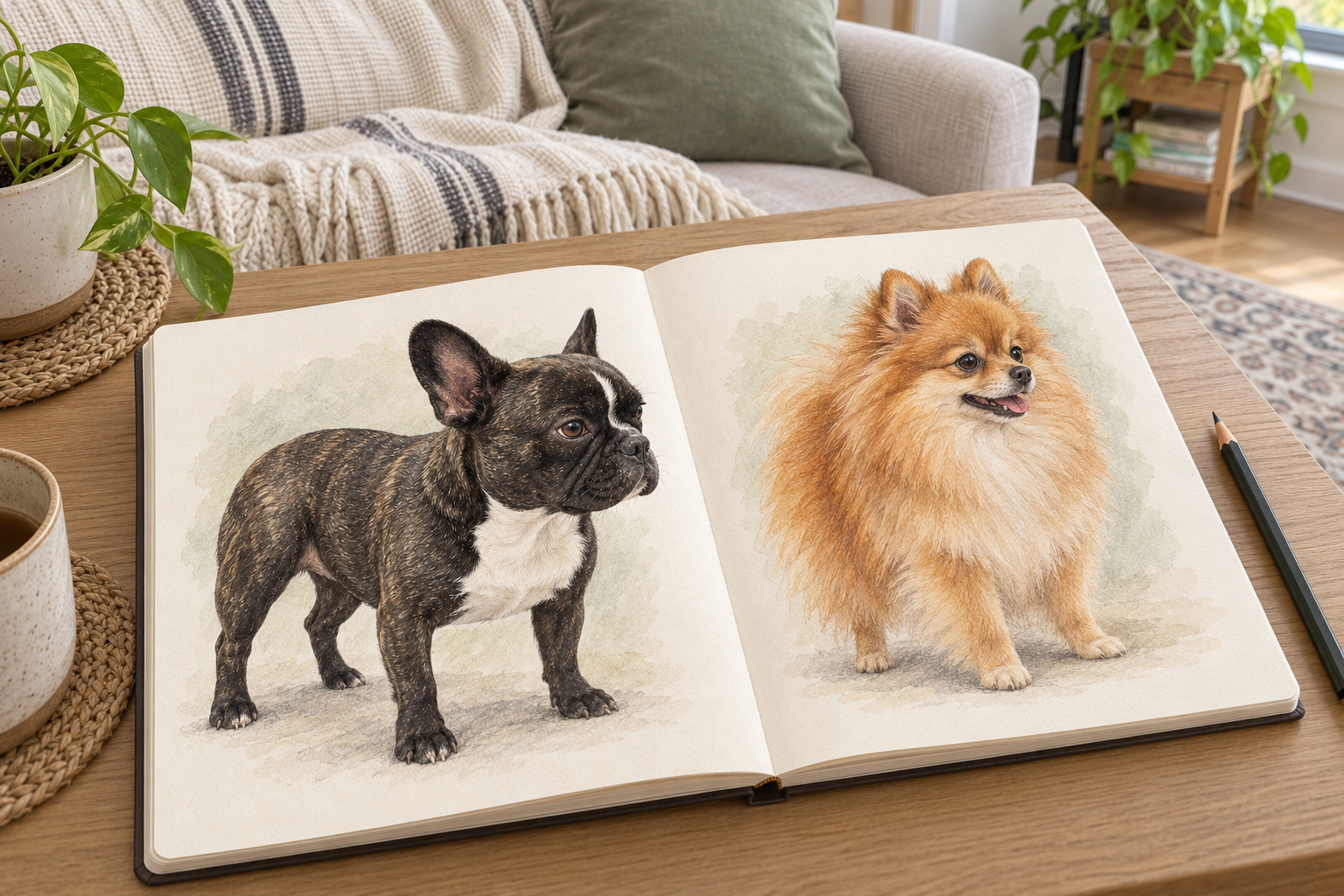

Key takeaways
- Adult size, coat and barking vary; a French Pomerdog name does not set a reliable standard.
- Pomeranian ancestry does not guarantee easier breathing or freedom from inherited health problems.
- Check the individual dog, both parents’ screening records and the grooming workload before committing.
A French Bulldog Pomeranian mix has ancestry from two very different-looking dogs. You may see the name French Pomerdog, but that label cannot promise a particular adult weight, fluffy coat, quiet temperament or healthier airway. The useful question is what this individual dog needs, especially for grooming, breathing and everyday life in your home.
Our French Bulldog mixes guide compares other crosses. For the Pomeranian cross, start with the coat you will maintain and the health records you can verify.
What does a French Bulldog Pomeranian mix look like?
There is no single look to shop for. A photo shows one dog at one age, not a dependable template for the next litter. Ask what is known about the parents and whether the dog is a first-generation cross or has a more complicated family history.
The American Pomeranian Club’s breed standard describes a Pomeranian’s dense undercoat and longer outer coat. That is useful background about one parent breed, not proof that every Frenchie-Pom puppy will grow the same coat. Nor does a fluffy dog automatically have Pomeranian ancestry.
Skip a checklist that treats upright ears, a particular nose length or a tiny frame as requirements. Comfortable movement and breathing matter more than matching an appealing puppy picture.
How big will the dog get?
A narrow adult range such as 8–25 pounds gives more certainty than the available evidence supports. Parent measurements and a puppy’s growth record can help a vet discuss likely size, but averaging the parents’ weights is not a guarantee.
If your housing has a firm weight limit, or you need to be able to lift the dog safely, an adult with an established weight gives you more useful information. Measure for a harness, carrier and bed using that dog’s body rather than a “French Pomerdog” size chart.
Coat care: find out what is underneath the fluff
The practical difference from a short-coated Frenchie may be how much coat you have to work through. A smooth-looking surface can hide tangles underneath. In a Pomeranian owner discussion about brushing, one commenter described finding matting despite daily brushing, while others reported different tools working for different coats. Those are individual experiences, but the question they raise is useful: are you reaching the coat that needs attention?
I’d choose tools for the coat in front of me, rather than buy a Frenchie brush simply because one parent is the same breed as Nina.
- Ask for a demonstration. Have a groomer identify the coat type and show you how to brush and check it gently, including the areas your dog finds awkward.
- Make room for regular maintenance. A dense or longer coat may need more time than a quick surface brush. Ask what home care and professional appointments this particular coat requires.
- Stop if grooming hurts. Do not drag a brush through tight mats. Get professional help with tangles close to the skin or a dog who is uncomfortable being handled.
- Discuss clipping before booking it. The AKC’s double-coat grooming guidance advises against routine shaving; matting or medical needs can require a different plan with a groomer or vet.
Budget for shedding, too. Neither the mix name nor a puppy’s current coat can promise a hair-free sofa. If someone in the household has dog allergies, speak to their allergist before choosing a dog. The American College of Allergy, Asthma and Immunology explains that all dogs produce allergens; coat length and a “hypoallergenic” sales claim cannot establish a safe match.
Breathing: a Pom parent is not a health clearance
A longer-looking nose does not reveal everything inside an airway. Cornell’s explanation of BOAS describes several possible obstructions, including narrowed nostrils and excess soft-palate tissue. A dog with French Bulldog ancestry and a shortened face still needs an individual assessment.
Ask about persistent breathing noise, disrupted sleep, gagging and difficulty with ordinary activity. Do not accept “that’s just the Frenchie side” as an explanation for discomfort. Our guide to French Bulldog breathing issues explains the signs to discuss with your vet. Never run a puppy hard to test its breathing yourself.
Pomeranian ancestry also brings its own questions. The American Pomeranian Club identifies collapsing trachea and luxating patellas among its breed health concerns. A persistent honking cough or a change in walking deserves veterinary attention, rather than being dismissed as a harmless small-dog habit. These parent-breed concerns do not establish how common either condition is in this cross or diagnose an individual dog.
Struggling to breathe, marked belly effort, blue-tinged gums or collapse requires immediate emergency veterinary care. Keep the dog calm and cool during transport and call ahead when possible. Cornell’s respiratory-distress guidance also advises seeking help when you are unsure.
What to ask before buying or adopting
“Vet checked” needs a follow-up question: checked for what, at what age, and with what results? A routine examination, a DNA test and an assessment of breathing function answer different questions.
For a puppy offered by a breeder, ask for identifiable results for both parents. The relevant parent-club guidance is a starting point for a conversation with your vet, not a certification scheme for this mixed dog:
- Pomeranian parent: the American Pomeranian Club’s screening guidance includes cardiac and patella evaluations, plus an eye or thyroid health elective. It also recommends hip and Legg-Calvé-Perthes evaluations.
- French Bulldog parent: the French Bull Dog Club of America’s health-testing guidance lists hip, eye, patella and cardiac screening, with additional recommended checks including respiratory function grading. Ask specifically about airway history and any surgery.
Look at the actual findings. OFA explains that a CHIC number means the required tests were completed and their results made public; it does not mean every result was normal. Screening reduces uncertainty but cannot guarantee lifelong health.
Ask to see where a puppy is raised, meet its mother where appropriate, and get the support and return arrangements in writing. Our breeder-vetting guide covers those practical checks. Walk away from pressure to pay for “teacup” size, an exaggerated face or supposed hybrid health without evidence. Cornell advises against breeding dogs with significant airway problems or those needing airway surgery.
A rescue may have no parent records. That uncertainty should be acknowledged, not filled with guesses. Ask for the dog’s available medical notes, known symptoms, current care and foster observations. Arrange a veterinary assessment and budget around what is known and what still needs investigating.
Barking, exercise and fitting into your home
The mix cannot promise the Pomeranian’s alertness combined with a quieter Frenchie temperament. Ask about real situations: hallway sounds, visitors, handling, other animals and time alone. “Friendly” tells you less than a foster carer explaining what happened during an ordinary week.
For barking, identify the trigger and reward a manageable alternative, such as turning away from the window or settling on a mat. The American Veterinary Society of Animal Behavior recommends reward-based training. Persistent fear or distress needs qualified help rather than a punishment collar.
Build walks, play and rest around the dog’s age, health and tolerance. Our Frenchie exercise guide offers a starting point for discussing limits; it is not a fixed exercise prescription for this mix. For dogs affected by BOAS, veterinary guidance includes avoiding heat and humidity, maintaining a healthy weight and using an appropriate harness. A dog who cannot keep up comfortably needs assessment, not encouragement to push through.
Before committing, make sure your household can accommodate grooming, training, veterinary costs and the dog’s actual behavior. A small body does not make those needs small.
FAQs about French Bulldog Pomeranian mixes
What is a French Bulldog Pomeranian mix called?
French Pomerdog, Frenchie Pom and similar informal names may be used. Ask what ancestry is documented. The nickname is not a health, size or temperament standard.
Will a Frenchie Pomeranian mix be fluffy?
Possibly, but a Pomeranian parent does not guarantee a particular adult coat. Look at the dog’s current coat and ask a groomer what maintenance it needs. Puppy pictures cannot promise the final appearance.
Is this mix healthier than a French Bulldog?
You cannot establish that from the parent breeds alone. Review the individual dog’s examination and family health information where available. A longer-looking muzzle, a mixed pedigree or a DNA report does not rule out airway disease or other health problems.
How long does a French Pomerdog live?
There is no well-established lifespan figure for this specific cross that justifies a promise such as 12–15 years. Ask your vet about the individual dog’s health and ongoing care, and plan for a long-term commitment without treating a lifespan estimate as a guarantee.
Is a French Bulldog Pomeranian mix a good apartment dog?
That depends on the dog and the home. Check reactions to shared-hallway noise, comfort when alone, access to toileting areas, stairs and your ability to provide exercise and grooming. An adult’s foster history can help, though behavior may change after moving.