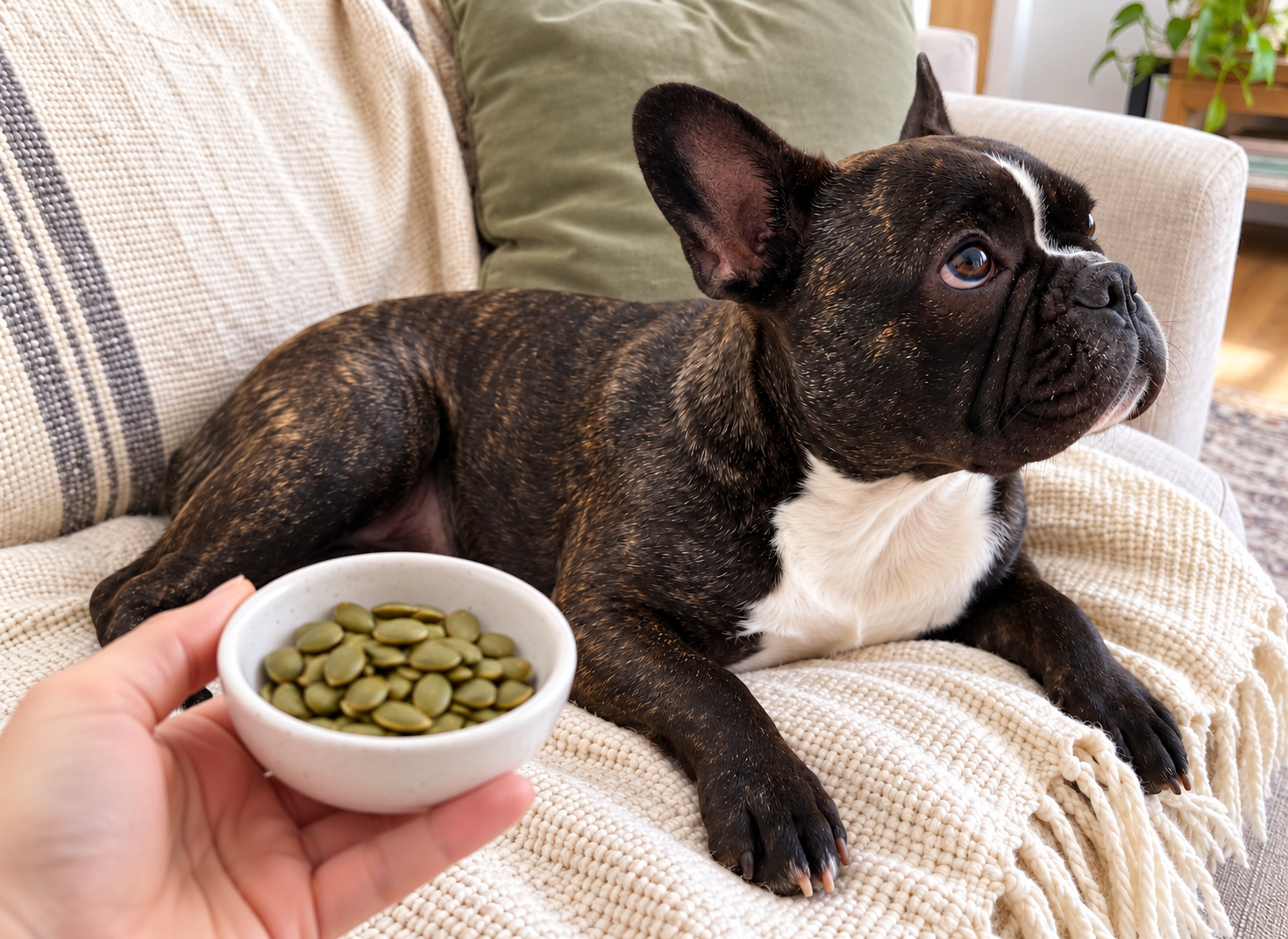

Dogs can sometimes have a small amount of plain pumpkin seed, but a handful from your snack bag is not the best place to start. Preparation, portion size and your dog’s diet matter. Seeds are optional extras, not a necessary supplement or a substitute for parasite treatment.
The ingredient check also matters in our guide to plain pumpkin for dogs: look at everything going into the food, not just the ingredient on the front of the packet.
Quick takeaways
- Choose plain, unsalted seeds without oil or seasoning, and ask whether they suit your dog’s diet.
- Avoid offering whole seeds to a dog who gulps food; discuss an appropriate prepared form with your vet.
- Do not use pumpkin seeds instead of veterinary parasite prevention or treatment.
Which pumpkin seeds are worth considering?
For a dog whose vet is happy with this extra, plain roasted seeds are a more practical choice than a seasoned snack mix. Countryside Veterinary Clinic’s feeding guidance advises small amounts without oil, salt, sugar or spices, and cautions about shells and seeds swallowed unchewed.
Before offering any, check:
- The ingredients: avoid seasoned, sweetened and coated versions.
- The form: hard outer shells and whole seeds deserve more caution than the soft pumpkin flesh used in puree.
- The condition: do not use seeds taken from a deteriorating decorative pumpkin or anything moldy or spoiled.
- The dog: a snack that one dog tolerates may be unsuitable for another’s feeding plan.
A packet marked “pepitas” still needs the same ingredient check. The name alone does not mean it is plain or appropriate for your dog.
Whole, shelled or ground?
Whole seeds are not a good choice for a dog who tends to gulp rather than chew. Central Broward Animal Hospital notes the choking concern with whole seeds and suggests grinding them before mixing into food. Removing shells and changing the texture does not remove the need for a sensible portion.
If you are unsure about preparing them, skip the seeds. There is no nutritional requirement to find a way to include this particular snack. A dog’s usual complete and balanced food can stay exactly as it is.
Do not scatter seeds on the floor for your Frenchie to chase, or assume a small seed must be easy to swallow. Keep snack time supervised and stop if your dog struggles with the food.
How much can a dog have?
There is no universal seed count for every dog. A teaspoon of ground seed, a handful of whole seeds and a spoonful of pumpkin puree are different foods and should not be treated as interchangeable portions.
UC Davis recommends limiting treats and other extras to no more than 10% of daily calories. That allowance includes everything outside the main diet, not an extra budget for each new ingredient.
For a healthy dog, check the packet’s calories and ask your vet what amount, if any, fits their routine. Keep the first introduction small and avoid adding several unfamiliar foods at once. For a dog on a prescribed or restricted diet, get the treating vet’s approval before adding seeds.
French Bulldogs do not need a special breed-based seed dose. Their actual weight, daily food allowance, chewing habits and health are the useful details.
Can pumpkin seeds deworm a dog?
Do not rely on them for that job. A claim about a plant compound does not tell you which parasite a dog has, whether an infection has cleared or what treatment is appropriate.
The Companion Animal Parasite Council’s guidelines center parasite care on appropriate testing, preventive medication and treatment tailored to the animal. Seeds are not a replacement for that plan. If you see something unusual in your dog’s stool or suspect worms, contact your vet and ask whether to bring a stool sample.
Do not stop a prescribed preventive, postpone testing or feed larger quantities of seeds in the hope of getting a medicinal effect.
What if your dog already ate some?
Put the remaining packet away and check what was in it. Tell your vet the ingredients, estimated amount, whether the shells were present, when it happened and whether your dog has symptoms. Unknown seasoning or a large amount deserves a call rather than a guess.
Seek urgent veterinary care if your dog is struggling to breathe. For vomiting, diarrhea, poor appetite or other concerning changes, stop offering the seeds and contact the clinic. If the pumpkin or seeds were moldy, Cornell’s Halloween safety guidance advises immediate veterinary contact after moldy pumpkin ingestion.
FAQs about pumpkin seeds for dogs
Can dogs eat salted pumpkin seeds?
Choose an unsalted, unseasoned product instead. If your dog has already eaten a salted snack, keep the packet and ask your vet about the amount and ingredients.
Can Frenchies eat pumpkin seeds?
Some may tolerate a small, appropriately prepared amount, but whole seeds and gulping are a poor combination. Check the diet and preparation with your vet rather than following a breed-specific serving chart.
Are seeds as useful as pumpkin puree?
They are different ingredients. Advice about soft pumpkin puree does not automatically apply to seeds, and neither should be used to diagnose or treat digestive symptoms at home.
Should I add pumpkin seeds every day?
There is no need to. If your dog does well on their current complete diet, leaving it alone is a reasonable decision. Any regular addition should fit the overall feeding plan.