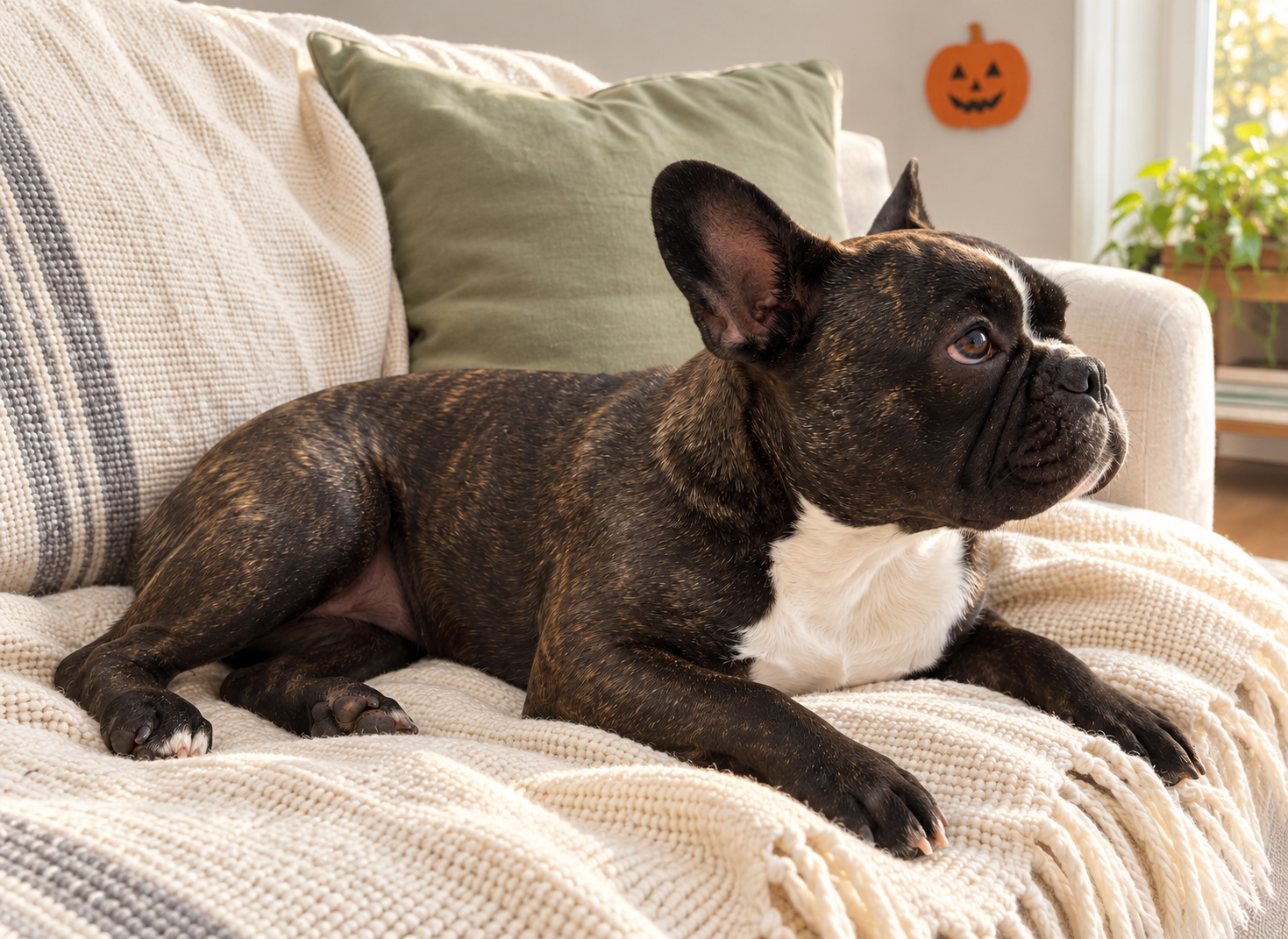

A calm place to rest, a secure front door and candy stored out of reach do more for Halloween dog safety than any costume. Plan around how your dog handles visitors and noise, not how you hope they will behave for a photograph.
If food is part of the evening, keep a small dog-only portion separate. Our pumpkin dog treats recipe is one option when the ingredients suit your dog, but their usual food or familiar treat is enough.
Quick takeaways
- Set up a comfortable resting area away from the front door before visitors arrive.
- Keep sweets, wrappers, candles and loose decorations out of reach.
- Make costumes optional. Remove anything that affects movement, breathing or comfort, especially for a flat-faced dog.
Before the doorbell starts
Choose a room where your dog already feels comfortable. Put their bed and water there, and check that windows and doors are secure. Use a familiar toy only if it is appropriate for that dog to have in this setting.
Agree on the plan with everyone in the house: who answers the door, who checks the dog and which door stays closed. A simple sign can remind guests not to enter the dog’s resting space.
The ASPCA recommends keeping dogs who are not comfortable with the activity away from the front door. You do not need to turn Halloween into an exercise in tolerating strangers. A quieter evening is a good outcome.
Make the front door harder to escape through
Check the dog’s identification before the evening begins, including the phone number on their tag and current microchip registration details. Decide how you will prevent access to the doorway each time it opens.
A barrier only helps if it suits the dog and everyone uses it. Do not rely on telling an excited dog to stay while guests move in and out. If you take a walk, keep the dog securely leashed and choose a quieter route or time if crowds are likely to overwhelm them.
AAHA’s Halloween guidance identifies escape risk, noise and stressful activity as things to plan for alongside food hazards.
Keep the candy and the cleanup together
Choose a candy storage spot the dog cannot access, and put a covered rubbish container nearby. That makes it easier to clear wrappers as the evening goes on instead of leaving them on a low table or floor.
Check children’s treat bags, visitors’ handbags and the room after a party. Chocolate and xylitol-containing sweets are particular concerns, but wrappers and mixed candy ingredients also matter. Nobody should offer the dog something from the human candy bowl.
If you think your dog ate candy, save the packaging and contact a veterinarian promptly. Our chocolate ingestion guide lists the details to gather while getting help. Do not wait to see whether the dog becomes ill or try to induce vomiting on your own.
Use a costume only if it suits the dog
Try any outfit in a calm setting before the event, then watch the dog move. They should be able to walk, turn, lie down, see and breathe normally. Avoid masks, dangling pieces or anything they can pull off and swallow.
AAHA’s costume safety advice highlights restricted movement and breathing, heat-trapping fabric and detachable decorations. An outfit that looks fine in a still photograph may be awkward when the dog walks.
Remove it if the dog freezes, tries to escape it, repeatedly paws at it or otherwise seems uncomfortable. Do not leave a costume on an unsupervised dog. No costume is always an option; your dog does not need to wear something to be included.
Give French Bulldogs extra breathing room
Flat-faced dogs can have more difficulty cooling themselves through panting. Cornell’s heat-safety guidance identifies short-muzzled breeds as more vulnerable to overheating.
For a Frenchie, keep the plan low-key: avoid hot, crowded spaces and heavy outfits, allow breaks and do not cover the face. Cool weather outside does not make a warm room or an insulating costume harmless.
Difficulty breathing, collapse or severe weakness needs urgent veterinary attention. Do not treat a change in breathing as a funny part of the costume or wait for a photo before responding.
Walk through the decorations at dog height
Look for things a nose, paw or wagging tail can reach. Move open flames, loose wires and small decorative pieces out of that space. A battery-powered decoration still needs its battery compartment and wiring kept away from chewing.
Keep carved pumpkins away from the dog, and remove any that are deteriorating. Cornell advises immediate veterinary contact if a pet eats moldy pumpkin.
Check the floor again after guests leave. Dropped sweets, costume accessories and wrappers can remain after the obvious decorations have been put away.
Keep the emergency plan easy to find
Save the number and address of the nearest emergency veterinary clinic before you need them. In the US, ASPCA Animal Poison Control is 888-426-4435 and Pet Poison Helpline is 855-764-7661. Both operate around the clock and charge a fee; the FDA lists these pet-poison contacts. Elsewhere, use a local emergency veterinarian or animal poison service.
FAQs about Halloween safety for dogs
Should my dog greet trick-or-treaters?
Only if the situation is comfortable and manageable for that dog. If you are unsure, keep them in their familiar resting area away from the doorway rather than testing their tolerance during the busiest part of the evening.
Is a bandana always safer than a costume?
It may be simpler, but it still needs appropriate fit, supervision and a dog who is comfortable wearing it. Anything that snags, tightens or gets chewed should come off.
What if the doorbell makes my dog anxious?
Plan a quieter setup in advance, with distance from the entrance and household members following the same routine. If your dog has significant noise or visitor-related distress, talk to your veterinarian before the event rather than trying a new calming product on the night.