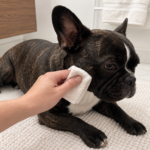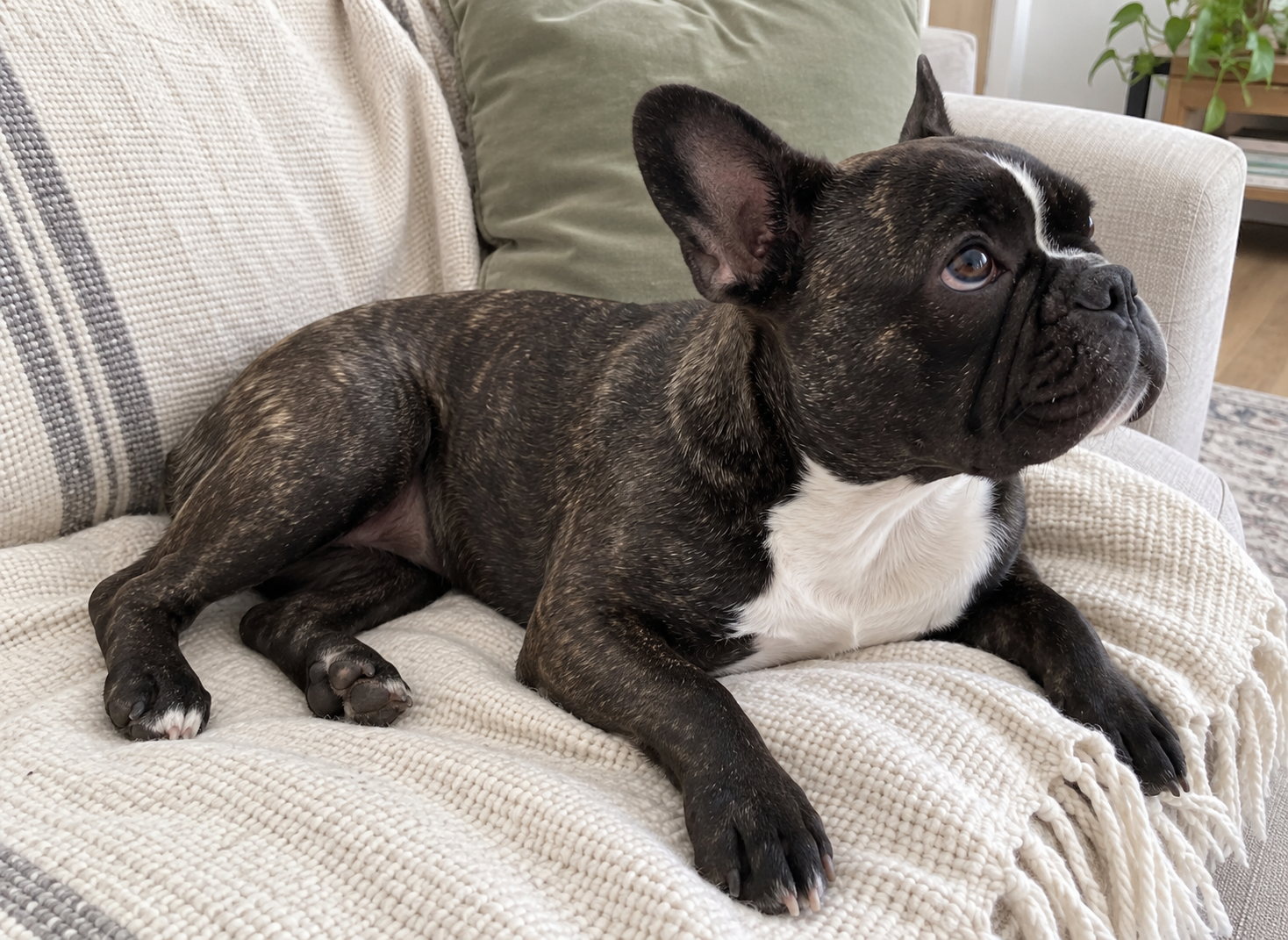

The first time Nina reverse sneezed, I was halfway to the car keys before it stopped. She had frozen mid-living-room, neck out, eyes wide, making a sound like a vacuum cleaner trying to start, and my brain went straight to choking. Then it ended, she shook her head, and looked at me like I was the one who needed supervision. She then walked over and asked for dinner.
If your dog is struggling to breathe, collapses or has blue or very pale gums, seek emergency veterinary care. Do not assume the sound is reverse sneezing. Nina’s brief episode ended normally, but a story online cannot identify what is happening to another dog. Our Frenchie health guide covers the wider airway concerns.
Key takeaways
- Confirmed reverse sneezing is often brief, with the dog normal between episodes.
- A new, changing or recurrent breathing noise deserves veterinary advice; a video may help if safe to record.
- Breathing distress, collapse or blue gums is an emergency. Do not block the nostrils or force water during an uncertain episode.
What reverse sneezing actually is
Reverse sneezing involves repeated inward snorts, often with the dog standing still and extending the neck. VCA’s veterinary overview describes episodes commonly lasting seconds to a minute, with normal behavior before and afterward.
That description is useful once the event has been identified. It does not mean every honk, gag or noisy breath is harmless. If this is new for your dog, discuss it with your vet; record a brief video only if doing so does not delay needed care.
Reverse sneezing and Frenchie airway anatomy
Frenchies have important flat-faced airway considerations, but that alone does not prove they reverse sneeze more than every other breed or that BOAS is the cause of a particular episode. Persistent noisy or effortful breathing deserves assessment in its own right.
Nina’s sleep noises are familiar to me, but familiarity is not a health check. Our snoring guide explains why normalizing every Frenchie sound can miss a problem.
The usual triggers
After a few years of notes, Nina’s pattern is almost boringly predictable:
- Excitement. The doorbell, a leash appearing, me saying the word “park” within earshot.
- Eating or drinking too fast. I note whether an episode follows a meal, without assuming that timing proves the cause.
- Dust, pollen, and household sprays. Anything that tickles the nose or throat can set one off, and mention other signs, such as licking their paws through allergy season, to the vet; they do not establish one shared diagnosis.
- Pulling on a collar. Avoid uncomfortable pressure. A well-fitted harness can be useful walking equipment, but it does not diagnose or cure the episodes.
- Leash-free cardio. I note any association with activity. Breathing difficulty during exercise means stop and seek advice, rather than calling it another harmless quirk.
What to do during an episode
Stay calm and assess whether your dog is breathing comfortably. For a familiar event already identified by your vet as reverse sneezing, follow their advice. Many such episodes end without intervention.
- Keep the surroundings calm. Stop exciting activity and avoid crowding or restraining the dog unnecessarily.
- Keep the airway clear. Do not cover the nostrils, force water or put fingers in the mouth to try to reset an undiagnosed event.
- Note the pattern. Duration, frequency, activity and other signs can help the vet. A video is useful only when it is safe to take one.
- Get help if uncertain. Difficulty breathing or failure to recover normally needs urgent advice; do not wait for a timer to expire.
When to worry about reverse sneezing or similar noises
Ask your vet about new or increasingly frequent episodes, nasal discharge, coughing, gagging, vomiting or a change in normal activity. Similar-looking events can have different causes. Do not select allergy medication simply because pollen is present.
Breathing distress, collapse, blue gums or marked weakness calls for emergency care. Noisy or effortful breathing at rest also deserves prompt assessment. Everyday care supports health, but cannot replace an airway examination.
FAQs about French Bulldog reverse sneezing
What does reverse sneezing sound like in a French Bulldog?
Repeated inward snorts, often with the neck extended. Sound alone is not enough to distinguish it from all other breathing problems; a vet can review the history and a safe video.
How long does a reverse-sneezing episode last?
Many last seconds to about a minute. That is a description, not a waiting rule: distress or an unusual episode needs advice regardless of elapsed time.
Is reverse sneezing dangerous for French Bulldogs?
Confirmed occasional reverse sneezing is often benign. The important distinction is whether the event has been correctly identified and whether other signs are present.
Why does my Frenchie reverse sneeze after eating or drinking?
Timing may help identify a trigger, but it does not prove one. Repeated meal-related episodes, gagging or regurgitation deserve veterinary assessment rather than assuming a slow feeder solves them.
Why does my Frenchie reverse sneeze when excited?
Excitement may be associated with episodes. Keep the situation calm and discuss changes with your vet, particularly if breathing is effortful.
Can I prevent reverse sneezing?
Avoid obvious irritants and follow your vet’s plan for any identified cause. No harness, feeding routine or home maneuver guarantees prevention.
Do French Bulldogs outgrow reverse sneezing?
There is no reliable age at which it must stop. A changing pattern should be assessed rather than explained away as age or permanent breed anatomy.
Why is my Frenchie reverse sneezing at night?
Tell your vet whether the dog is asleep, waking, coughing or breathing noisily between episodes. Do not assume every nighttime noise is reverse sneezing.
Will Benadryl stop my Frenchie reverse sneezing?
Do not use it as a routine home fix. Medication depends on the diagnosis and the individual dog; ask your vet before giving an antihistamine.