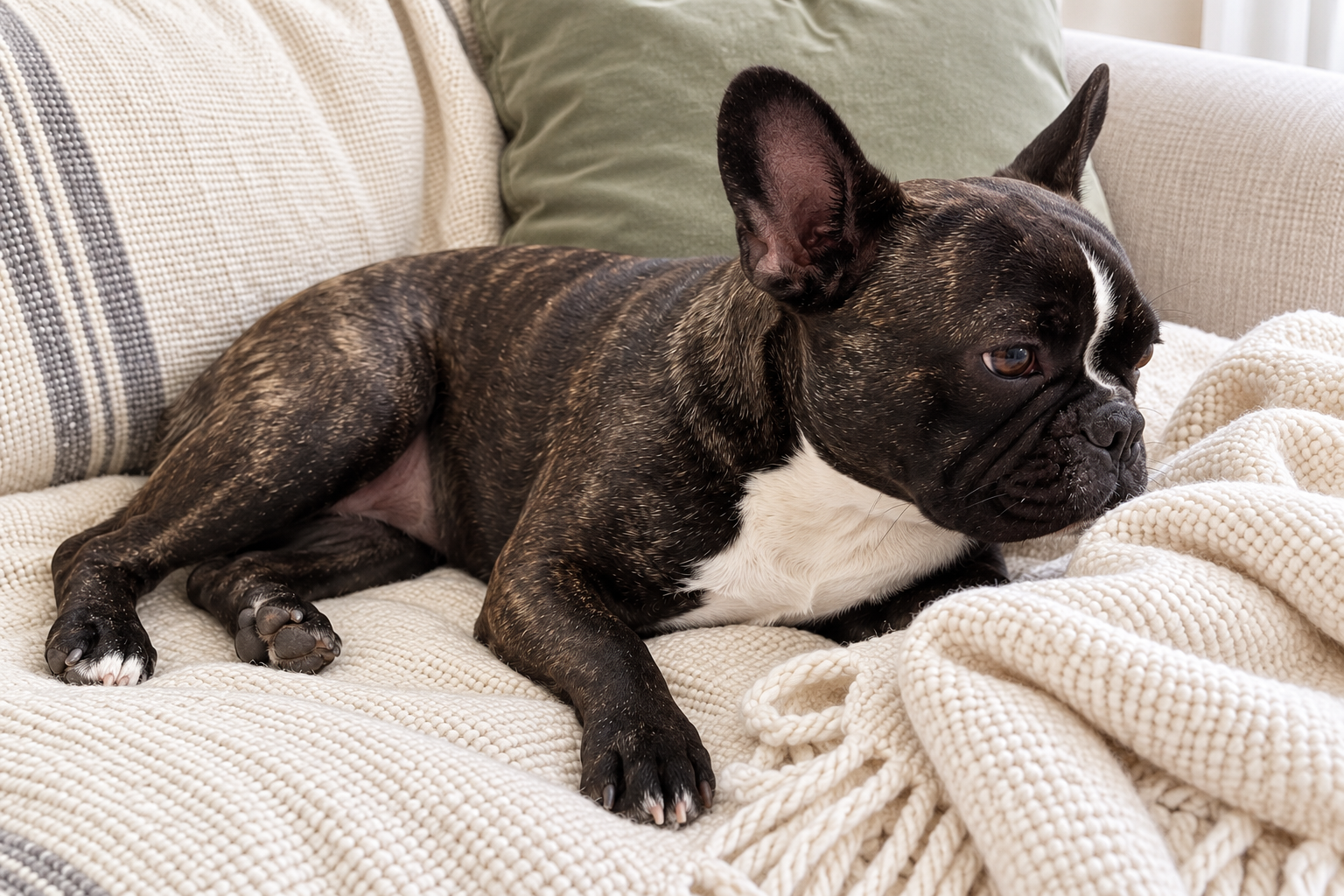

French Bulldogs have a normal dog scent, but a strong, new or persistent smell deserves a closer look. Damp skin folds, sore ears, irritated paws, dental disease and anal-sac problems can all contribute. A bath may help a dirty coat; it won’t tell you which of those problems is present.
Start by finding where the odor is strongest. If it’s around the face, our French Bulldog wrinkle-cleaning guide explains gentle routine care. Red, painful or weeping skin needs a vet’s assessment before you keep wiping.
Key takeaways
- A strong or changing smell deserves investigation, even in a wrinkly Frenchie.
- Check the folds, ears, paws, mouth and rear; odor alone cannot diagnose an infection.
- Keep healthy skin clean and dry, and seek veterinary advice for pain, discharge or recurring odor.
Are French Bulldogs naturally smelly?
They aren’t supposed to have a constant foul smell. The breed does have skin folds that need attention, and skin or ear disease can make a dog smell much stronger than usual.
A large UK VetCompass study comparing French Bulldogs with other dogs found increased odds of skin-fold dermatitis and aural discharge. That supports taking those areas seriously. It doesn’t establish that every Frenchie smells, or that the breed’s normal scent is stronger than every other short-haired dog’s.
The useful distinction is between a familiar mild scent and a change: an odor that suddenly appears, returns soon after cleaning, or comes with itching or discomfort. Your nose can help locate the problem. It can’t identify the organism causing it.
Where to look when your Frenchie smells bad
Check calmly in good light. Don’t force a sore ear open, dig beneath a tightly tucked tail or put your face close to a dog who may snap from pain. Note the location and visible changes so you can describe them to your vet.
Face folds and lip folds
Moisture, friction and trapped debris can irritate the skin where two surfaces meet. Look around the nose fold and lips for redness, dampness, discharge or tenderness. VCA’s guidance on skin-fold pyoderma explains how moist folds can develop bacterial infection.
For comfortable, healthy skin, gently remove visible debris with the method your vet recommends, then dry the fold. Avoid scrubbing and keep products out of the eyes and nostrils. If the fold is sore or the smell keeps returning, more vigorous cleaning is unlikely to be the answer.
Ears
An unpleasant ear odor with head shaking, scratching, redness or discharge is a reason to book an examination. Yeast and bacteria are possibilities, but allergies, foreign material and other ear problems can be involved too.
Cornell’s ear-care guidance recommends veterinary assessment when signs of infection are present. Use a prescribed cleaning plan rather than peroxide, vinegar, cotton swabs pushed into the canal or leftover drops. Our French Bulldog ear-infection guide covers the signs and what an appointment may involve.
Paws and the skin between the toes
A faint foot smell without redness or discomfort isn’t enough to label a yeast infection. A stronger musty smell, repeated licking, greasy skin or sore areas between the toes deserves attention.
Yeast normally lives on canine skin. When it contributes to dermatitis, a vet considers the skin changes and examines samples; the smell alone is insufficient. VCA describes that diagnostic process and the importance of addressing underlying conditions when infections recur. After a wet walk, gently dry the paws, including between the toes. Don’t keep applying home antifungal mixtures to an undiagnosed sore foot.
Tail folds and the surrounding coat
Some Frenchies have a deep fold beneath the tail; others have a much shallower one. Check for soiling and moisture only as far as your dog comfortably allows. If you cannot see the skin or aren’t sure where the fold ends, ask your veterinary team to demonstrate care.
Remove ordinary surface dirt gently and dry afterward. Pain, discharge or inflamed skin needs an examination. Avoid forcing the tail upward or packing cream into a pocket you can’t inspect.
Mouth and teeth
Persistent bad breath belongs on the checklist, particularly with red gums, drooling, difficulty chewing or food dropping from the mouth. Dental problems can hurt even when a dog continues eating. The AVMA’s pet dental-care guidance lists bad breath and changes in eating among reasons to have the mouth checked.
Once the mouth is comfortable, a regular home dental routine supports professional care. Our guide to French Bulldog teeth explains the basics. A scented chew should not be used to cover a new mouth odor.
Anal sacs, gas and other rear-end smells
A sudden fishy odor near the rear may come from anal-sac fluid. Repeated licking, scooting, swelling or pain makes veterinary assessment particularly important. VCA explains that impacted or infected anal sacs can be painful and may need treatment beyond emptying them. Don’t squeeze a sore area yourself.
A brief episode of gas is a different problem from odor that stays on the skin. If gas is frequent, record meals, treats, stool changes and any vomiting rather than repeatedly changing food. A urine or fecal smell also deserves a check for soiling, leakage or skin irritation; straining to urinate or being unable to pass urine needs urgent veterinary help.
Can food or allergies make a Frenchie smell?
Nina has a chicken allergy, so ingredients matter for her. That doesn’t mean chicken explains another Frenchie’s odor, or that a smell tells you which ingredient to remove.
Allergic skin disease can contribute to recurrent skin and ear trouble, while digestive signs have several possible causes. If your dog is both itchy and smelly, the French Bulldog allergy guide is a useful next step. Keep the actual food and treat labels for the appointment.
When food allergy is suspected, a veterinary elimination-and-challenge diet trial is more informative than guessing from the smell or buying a succession of different proteins. Don’t change several foods, shampoos and supplements at once: it makes the response harder to interpret.
A practical routine to keep a French Bulldog fresh
The aim is comfortable skin and a clean home. It doesn’t require making your dog smell like laundry detergent.
- Look during normal daily care. Notice damp folds, paw licking, dirty coat areas and changes in the ears. Inspection doesn’t mean every area needs a product every day.
- Clean what needs cleaning. Use gentle, dog-appropriate products or the specific treatment your vet has prescribed. Dry skin folds after they become wet.
- Keep fabrics in the routine. Wash bedding, removable covers and washable harnesses according to their labels, and let them dry fully. Check whether the lingering smell is on the fabric or the dog.
- Keep a short record of recurring trouble. Note the body area, when the odor returns and whether there is itch, discharge or stool change. Photos of visible irritation can help.
How often should you bathe a French Bulldog?
There isn’t a universal four-to-six-week rule. Bathing needs depend on the dog’s skin, activities and treatment plan. Healthy dogs may only need occasional baths when dirty; a vet may deliberately prescribe more frequent bathing for a skin condition.
VCA’s coat-care advice makes that distinction. Choose a shampoo formulated for dogs, rinse thoroughly and follow any medicated product’s contact time. Our Frenchie bathing guide covers the process. If odor returns promptly after a bath, investigate the source instead of automatically increasing the frequency.
When to see the vet
Arrange an appointment for a persistent unexplained smell, repeated flare-ups or any odor accompanied by itching, redness, discharge, sores or changed behavior. There is no benefit in waiting through two weeks of home cleaning when an ear or fold is already painful.
Seek prompt care for a painful swelling near the anus, blood or pus, significant mouth pain, or a dog who seems unwell. Difficulty breathing, collapse, inability to urinate or severe pain warrants urgent help. Cornell lists these among veterinary emergency signs.
Before the appointment, write down what you’ve used on the area and when. Don’t add a new deodorizer to mask the smell. The important outcome is finding and treating the cause.
FAQs about French Bulldog smell
How do I stop my Frenchie from stinking?
Locate the source first. Clean and dry healthy folds, wash soiled bedding and bathe a dirty coat appropriately. If there is pain, irritation, discharge or rapid recurrence, have your vet check the affected area rather than adding fragrance.
Why does my Frenchie still smell after a bath?
The odor may come from an ear, the mouth, a fold or anal-sac fluid rather than ordinary coat dirt. Damp skin and unwashed bedding can also leave a smell behind. A bath that only briefly helps is useful information to tell the vet.
Why do my Frenchie’s paws smell like corn chips?
That description is common, but it isn’t a diagnosis. Look for changes from your dog’s usual scent and for licking, redness, swelling or discomfort. Those extra signs are more useful than trying to identify yeast by smell.
Will a fishy smell go away on its own?
A brief anal-sac release may leave a lingering smell even without disease. Repeated odor, scooting, swelling, licking or pain should be checked. Don’t assume every fishy smell comes from the glands, especially if its source seems to be the mouth or urinary area.
Can I use baby wipes or perfume on Frenchie folds?
Skip perfume. For routine fold care, use your vet’s recommended method and a product appropriate for the area. An unscented label alone doesn’t establish that a wipe is suitable near the eyes. Gentle cleaning and drying are preferable to repeated rubbing.
Does a musty smell always mean a yeast infection?
No. Several skin problems can smell similar, and yeast can live on healthy skin. A veterinary examination and, when needed, a skin sample help distinguish infection from other causes and guide treatment.